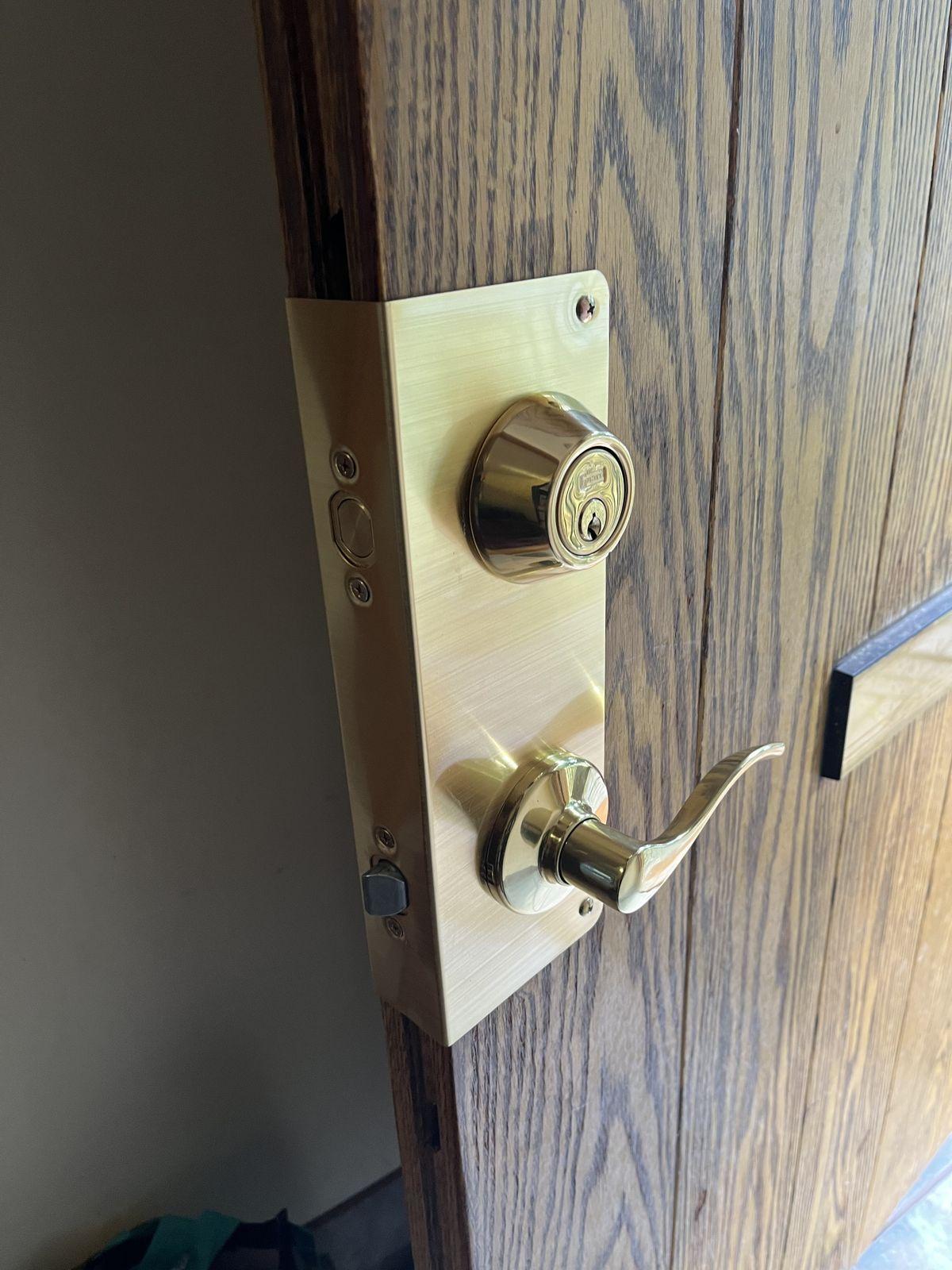
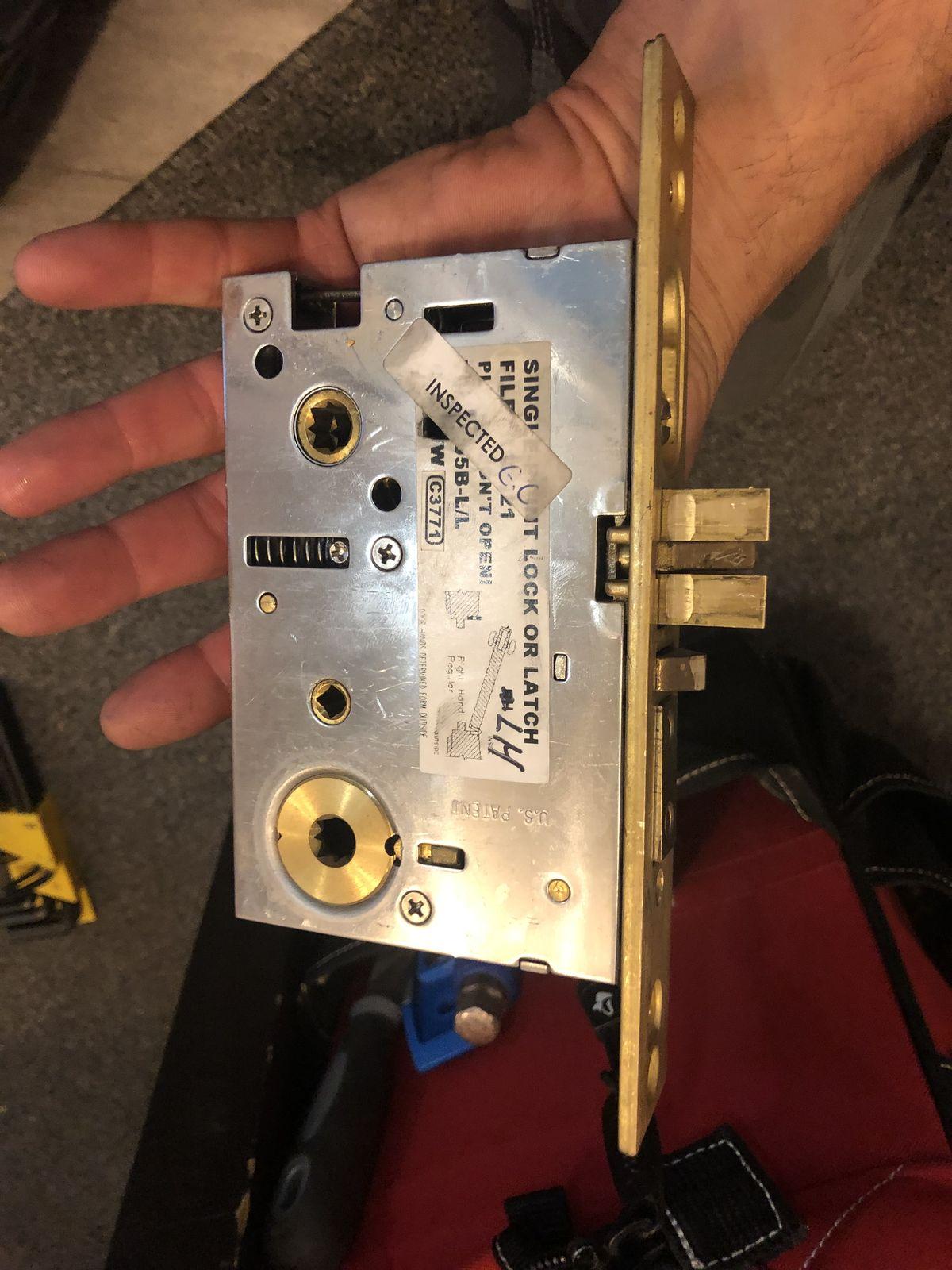
Worn lock mechanism ready for service
Locks Fail Gradually, Not Suddenly
Very few locks fail all at once. Almost every emergency callout we get across Ottawa for a "broken lock" is actually the final stage of a problem that's been building for months, sometimes years. The good news is that a failing lock almost always gives warning signs first, and catching them early means a planned replacement on your schedule instead of an emergency locksmith call at an inconvenient hour.
Here are the ten signs we see most often on service calls throughout Ottawa, roughly in order of how commonly they show up.
1. The Key Sticks or Catches
If your key hesitates or catches partway through turning, something inside the cylinder is wearing down, whether that's the pins, the springs, or built-up debris that lubrication alone won't fully resolve anymore. A little stickiness once in a while is normal. Consistent, worsening resistance is not.
2. The Cylinder Feels Loose
Give your lock cylinder a gentle wiggle with the key removed. Any looseness or play means the mounting has worn down or the internal components have shifted out of proper alignment. A loose cylinder is both a functional problem and a security one, since it can make the lock easier to manipulate from outside.
3. Your Keys Look Worn or Rounded
Keys wear down every time they're used, and the wear is often more visible on the key than inside the lock. If the ridges on your key look smoothed out or rounded compared to a fresh-cut copy, the lock's pins have likely worn to match that rounded profile too, which reduces the security value of the pin configuration altogether.
4. Visible Rust or Corrosion
Rust anywhere on the visible parts of a lock, whether on the bolt, the faceplate, or around the keyhole, is a sign that moisture has already gotten inside. By the time rust is visible, it's usually further along internally than it appears from the outside, and lubrication at this stage tends to slow the problem rather than fix it.
5. The Deadbolt Doesn't Throw Fully
Lock the door and look at the bolt. If it doesn't extend completely into the strike plate, or stops short with any resistance, your home's security is meaningfully compromised even though the door appears locked. This is one of the more dangerous signs on this list because it's easy to miss without actually checking.
6. You Need to Jiggle or Wiggle the Key
Any technique you've developed to get your own lock open, a specific angle, a jiggle, a firm push while turning, is a workaround for a mechanical problem, not a normal part of using a lock. If you've adapted your own behaviour to compensate for a lock's quirks, the lock has already told you it needs attention.
7. The Lock Has Been Picked or Bumped
If you have any reason to believe your lock was tampered with, whether from an attempted break-in, scratches around the keyhole, or general suspicion after being away from the house, replacement is the safer choice over simply rekeying. Physical manipulation attempts can damage internal components in ways that aren't always obvious from the outside.
8. It's More Than 15 Years Old
Locks don't come with an expiry date, but internal components do wear down with age regardless of how well they've been maintained. A lock that's been in service for fifteen years or more, especially one that's seen fifteen Ottawa winters the whole time, is a reasonable candidate for replacement even if it's still technically functioning, simply because failure risk climbs the older a lock gets.
9. The Door Wobbles When Locked
If the door itself shifts or wobbles even when the deadbolt is thrown, the issue may be as much about the door and frame as the lock. Either way, it means the lock isn't providing the rigid, secure hold it's supposed to, and that's worth addressing whether the fix ends up being a new lock, a reinforced strike plate, or both.
10. You've Lost Track of Who Has a Key
This isn't a mechanical sign, but it's a practical one that belongs on this list. If you genuinely don't know how many keys exist for your home, whether from past tenants, contractors, or family members who've since moved on, that uncertainty is itself a reason to act, whether through rekeying or a full lock upgrade.
What Happens If You Ignore These Signs
Locks that are ignored past these warning signs tend to fail in one of two ways: they eventually stop turning altogether, which means you're locked out, or they stop providing real security while still appearing to function, which means you're at greater risk without knowing it. Neither outcome is one you want to discover for the first time during an actual emergency.
Final Word
A lock that's starting to fail almost always tells you before it actually locks you out. Catching these ten signs early turns a potential emergency into a simple, planned replacement, and it's worth a five-minute check on each exterior door at least once a year.
Can-Lock Security inspects and replaces residential locks throughout Ottawa and every surrounding community, including Kanata, Nepean, Barrhaven, Stittsville, and Orleans, as well as Arnprior, Renfrew, and communities throughout the GTA including Toronto, Mississauga, and Richmond Hill. If any of these signs sound familiar in your Ottawa home, we can take a look before it turns into a lockout.
Ottawa: 613-908-8815 | Toronto/GTA: 647-975-1702
Suggested internal links: Lock Replacement, Residential Locksmith, Lock Repair, Rekeying, Emergency Locksmith
FAQs
Open a question for a short answer.
Mild, occasional stickiness often responds well to proper lubrication. Consistent or worsening resistance usually points to internal wear that lubrication won't fully resolve.
With reasonable maintenance, most residential locks last ten to fifteen years, though harsh winter exposure can shorten that window for locks on exterior doors.
Both. A loose cylinder is a genuine security weakness, not just an inconvenience, since it can make the lock easier to manipulate.
It depends on age and condition. If several locks were installed at the same time, they're often wearing at a similar rate, so it's worth having them all inspected rather than just replacing the one giving you trouble.
For minor issues, repair or lubrication can extend a lock's life. Once several of the signs above are present, replacement is usually more cost-effective than repeated repair visits.