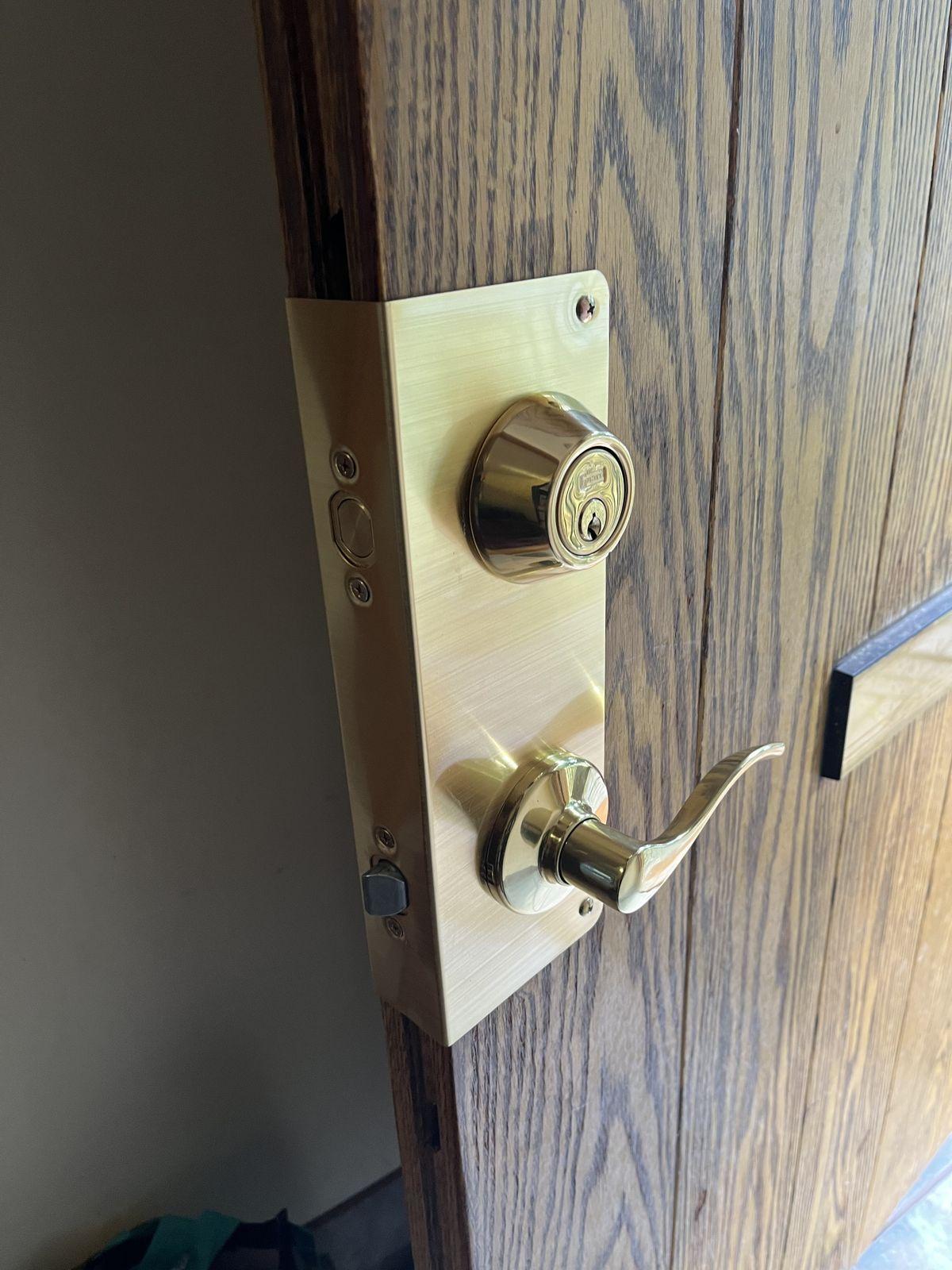
Rekey versus full lock replacement
Two Different Questions That Get Confused Constantly
"Should I rekey or replace my locks?" is one of the most common questions we get, and the honest answer is that most homeowners don't need to choose between the two nearly as often as they think. Rekeying and replacement solve different problems, and once you understand what each one actually does, the right choice for your situation becomes obvious fairly quickly.
What Rekeying Actually Does
Rekeying changes the internal pin configuration of an existing lock so that old keys no longer work, and new keys are cut to match the new configuration. The lock itself, the hardware you see and touch every day, stays exactly the same. Nothing gets removed from the door. A locksmith opens the cylinder, swaps the pins, and hands you new keys, usually within a few minutes per lock.
This is the right solution when the lock itself is in good working condition and your only concern is who has access to it, not the quality or age of the hardware.
What Replacement Actually Does
Replacement removes the entire lock, deadbolt or knob, and installs new hardware in its place. This is the right call when the lock itself has a problem: it's worn out, damaged, outdated, or you want to upgrade to a higher security grade or a smart lock. Replacement addresses both who can get in and how strong the lock itself is against forced entry, picking, or drilling.
Moving Into a New Home
This is the single most common reason Ottawa homeowners call us, and it's also the clearest case for rekeying rather than replacement, assuming the existing locks are in reasonable shape. You have no way of knowing how many keys are floating around from previous owners, contractors, real estate agents, or old tenants, and rekeying closes that gap completely for a fraction of the cost of replacing every lock in the house.
The exception is if the existing locks are outdated, low-security, or simply not what you want long-term. In that case, moving day is also a natural moment to upgrade while you're already having a locksmith out.
Lost or Stolen Keys
If a key goes missing and you're not sure where it ended up, especially one with any identifying information nearby, rekeying is almost always the answer. The lock itself hasn't done anything wrong; you just need to make sure whoever finds that key can't use it. Replacement isn't necessary unless the lock was already due for an upgrade anyway.
After a Break-In
This is a case where the two options genuinely need to be evaluated together. If a lock was picked, drilled, or forced during a break-in attempt, even an unsuccessful one, the hardware itself may be compromised or damaged and needs replacement rather than just a rekey. If the point of entry was somewhere other than the affected lock, rekeying that specific lock along with a broader security review, including reinforced strike plates or an upgrade to high-security hardware, is often the more complete response.
Tenant Turnover
Landlords and property managers across Ottawa, including those with rental units near the University of Ottawa and Carleton, along with property owners across the GTA, should treat rekeying as a standard, non-negotiable step between tenants, not an optional extra. It's inexpensive, fast, and eliminates any question about who might still have a working key from a previous tenancy. Replacement only becomes necessary if the existing locks show real wear from years of tenant use, which is common in units that haven't had hardware updated in a decade or more.
Cost Comparison
Rekeying is almost always the lower-cost option, since it involves labour and a small pin kit rather than new hardware. Replacement costs more because you're paying for both the new lock itself and the installation labour, and costs scale up further if you're upgrading to high-security or smart lock hardware. For a household weighing several locks across a home, rekeying every exterior lock is typically a fraction of the cost of replacing them all, which is why it's the default recommendation whenever the existing hardware is sound.
Security Differences Worth Knowing
Rekeying restores your control over who holds a key but doesn't change the underlying strength of the lock. If your current locks are a decade old or came as basic builder-grade hardware, rekeying gives you peace of mind about access without addressing whether the lock itself would hold up to a determined attempt at forced entry. Replacement is the only path to genuinely upgrading resistance to picking, drilling, or kicking, since it involves installing hardware built to a higher standard in the first place.
How to Decide, Step by Step
A simple way to work through the decision:
- Is the lock itself in good physical condition? If yes, continue. If no, replace.
- Is your only concern who currently holds a working key? If yes, rekey.
- Do you want stronger security, smart features, or a different look? If yes, replace.
- Was the lock involved in an attempted or actual break-in? If yes, have it inspected and likely replaced.
- Are you managing a rental property between tenants? Rekey as standard practice every turnover.
Final Word
Rekeying and replacement aren't competing options so much as two different tools for two different problems. Most of the time, the deciding factor is simple: is this about who has a key, or is this about the lock itself? Answer that honestly and the right choice is usually clear.
Can-Lock Security offers both rekeying and full lock replacement for Ottawa homeowners, landlords, and businesses throughout the city, including Kanata, Nepean, Barrhaven, Stittsville, and Orleans, plus Arnprior, Renfrew, and the GTA including Toronto, Mississauga, and Vaughan. Not sure which one you need? Give our Ottawa team a call and we'll help you figure it out over the phone before we even show up.
Ottawa: 613-908-8815 | Toronto/GTA: 647-975-1702
Suggested internal links: Rekeying, Lock Replacement, Residential Locksmith, Commercial Locksmith, High-Security Locks
FAQs
Open a question for a short answer.
For controlling who has a working key, yes. Rekeying doesn't change the underlying strength or security grade of the hardware itself, so if the lock is old or low-security, replacement is a better long-term choice.
Rekeying is typically much faster, often just a few minutes per lock, since no hardware needs to be removed or installed. Replacement takes longer because new hardware has to be fitted and tested.
Most standard pin-tumbler locks can be rekeyed. Some high-security or electronic locks have different processes, and a locksmith can confirm what your specific hardware allows.
Rekeying is usually sufficient, since the concern is typically about who holds a key rather than the condition of the lock itself.
If you want the convenience and features of a smart lock, replacement is necessary, since rekeying only applies to traditional mechanical cylinders.