- City
- Markham, Ontario
- Service performed
- High-Security Locks
- Time required
- Typically 1–2 hours
- Lock type
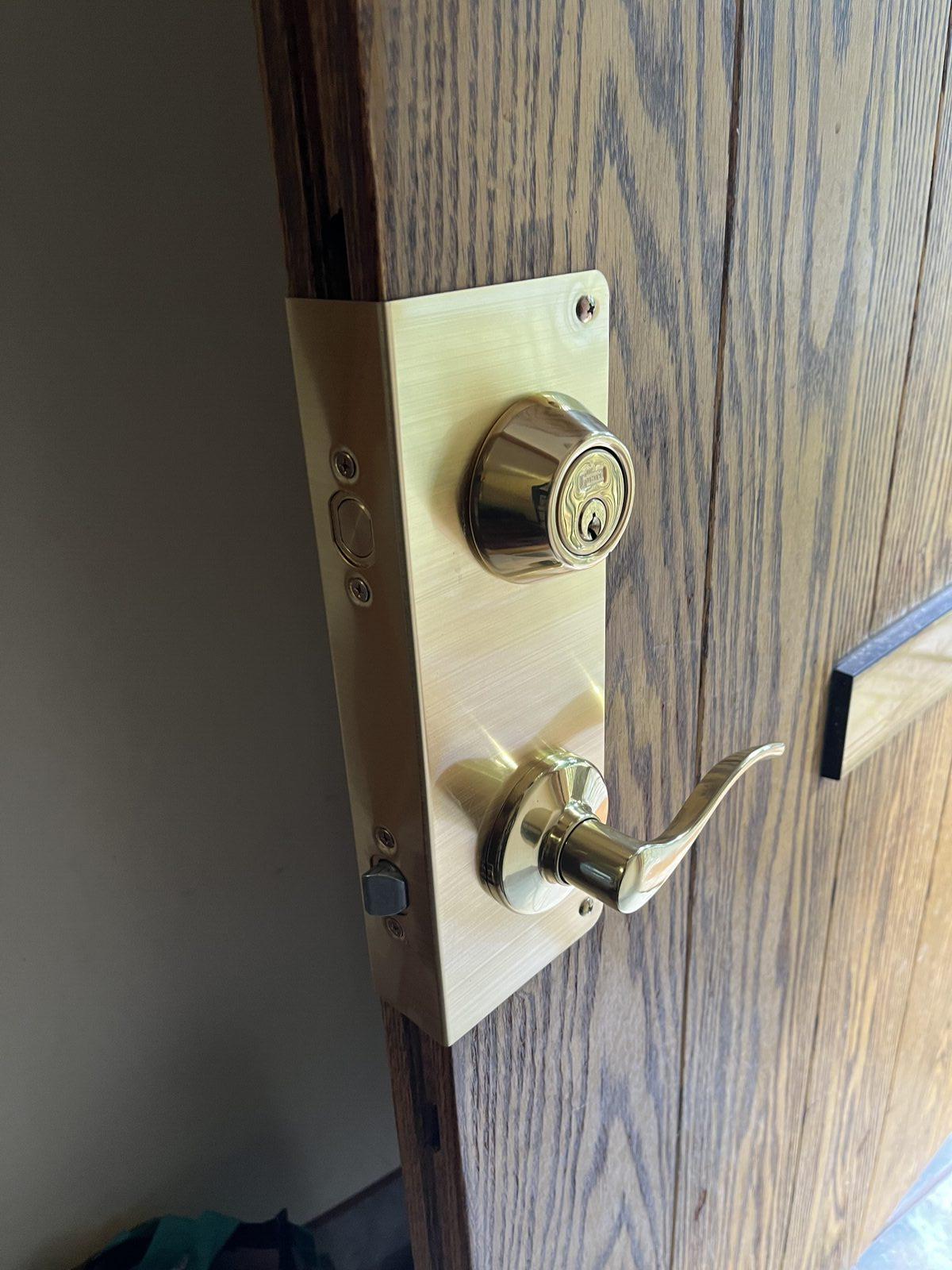
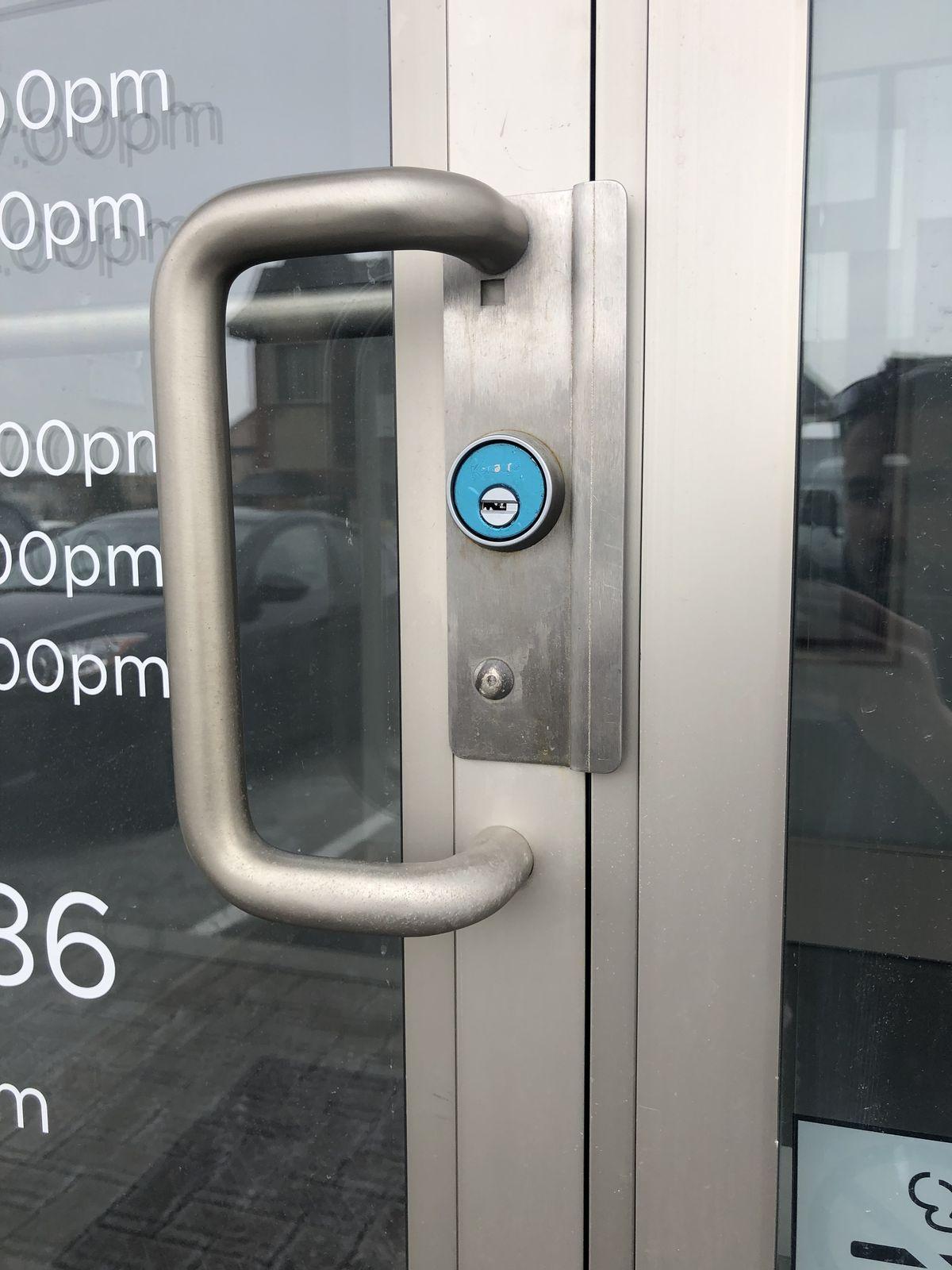
- High-security storefront cylinder
Problem
A business entry needed stronger key control than a basic builder-grade cylinder offered.
Solution
Installed a high-security cylinder suited to the storefront opening and verified operation with the approved key set.
Materials used
- High-security cylinder
- Restricted / controlled keys as specified
- Mounting hardware
What “high-security cylinder” means on a storefront
On a commercial glass entry, upgrading security often focuses on the cylinder and key control rather than replacing the entire narrow-stile case on day one. A high-security cylinder typically brings tighter tolerances, stronger resistance to common bypass methods, and — most important for many owners — a restricted keyway that cannot be duplicated at a random kiosk without authorization.
That last point matters in retail and professional offices where keys get copied casually over years. A restricted system makes “how many keys exist?” a manageable question again.
Fitting restricted cylinders to storefront hardware
Not every high-security cylinder drops into every storefront lock. Cam type, cylinder length, and collar or housing details have to match the existing mortise or deadlatch. We verify compatibility before promising an upgrade path that would leave you waiting on special-order parts with the old cylinder already removed.
When the lock case itself is worn out, pairing a premium cylinder with a failing latch is poor value. Inspection decides whether the job is cylinder-only, case service, or a broader hardware refresh.
Key control and authorization after install
Restricted keys usually come with a policy: who can order duplicates, what ID or authorization card is required, and whether the business wants a local locksmith authorized on the account. We set that expectation at handoff so managers are not surprised the first time they need an extra key for a new opener.
Staff turnover plans should include collecting restricted keys the same way you collect alarm codes. The hardware upgrade only pays off if key issuance stays deliberate.
Markham and wider GTA commercial context
Plaza storefronts and unit entries across Markham, Richmond Hill, and neighbouring GTA cities see heavy cycle counts and mixed after-hours access. High-security cylinders are one layer; door alignment, threshold strikes, and rear-exit keying still matter. We treat the cylinder upgrade as part of the opening’s whole security picture, not a magic plug-in.
If the business also uses a rear steel door or rolling grille on a different keyway, we map how the new restricted key should — or should not — interact with those openings so nobody invents an accidental master hierarchy.
Testing and what this project shows
After install, the new cylinder must turn smoothly, drive the cam correctly, and latch the door without forcing the stile. Restricted keys are tested in the actual cylinder, not assumed from the factory bag count. Exterior pull and interior thumbturn or paddle behaviour are confirmed as the lock design requires.
This write-up matches high-security storefront cylinder work of the type shown. It does not invent intrusion statistics or claim a particular brand is mandatory for every shop. Product choice follows the existing lock case, the owner’s key-control goals, and what can be installed cleanly on that stile.
When high-security is — and is not — the right next step
Choose a restricted cylinder when unauthorized key copies, past employee keys, or repeated after-hours concerns are the real pain. Skip it — or postpone it — when the door will not latch, the frame is failing, or the business is about to replace the whole storefront assembly in a renovation. Paying for key control on hardware that will be scrapped next month is poor timing.
Insurance questionnaires sometimes ask about lock grades or restricted keys; we can describe what was installed in plain language for your records without inventing certifications we did not provide. If a carrier requires a specific listed product, bring that requirement to the booking conversation so we source correctly the first time.
Owners who already run a master-key system across several units should treat a single storefront upgrade as a hierarchy decision, not an isolated swap. Mixing restricted and open keyways without a written plan creates confusion for staff and for the next locksmith who services the suite.
Frequently asked questions
Open a question for a short answer.
Not necessarily. Many upgrades replace the cylinder while keeping a serviceable lock case. A damaged case needs repair or replacement as well.
Restricted keyways are designed so unauthorized duplication is blocked. Duplicates typically require authorization through the controlled system.
No. High-security installs issue new controlled keys. Old keys for the removed cylinder stop working.
When the compatible cylinder is on hand, many installs fall in about the one-to-two-hour range including testing. Special-order restricted hardware can add lead time before the visit.
Not always. Prioritize the highest-risk entries first, but plan keying so staff are not juggling incompatible systems without a clear reason.
A premium cylinder cannot fix a door that does not latch. Alignment and strike condition should be corrected alongside any cylinder upgrade.
Often yes within the same product family and authorization rules. Cross-brand mixing usually is not. We map the hierarchy before pinning cores.