- City
- Mississauga, Ontario
- Service performed
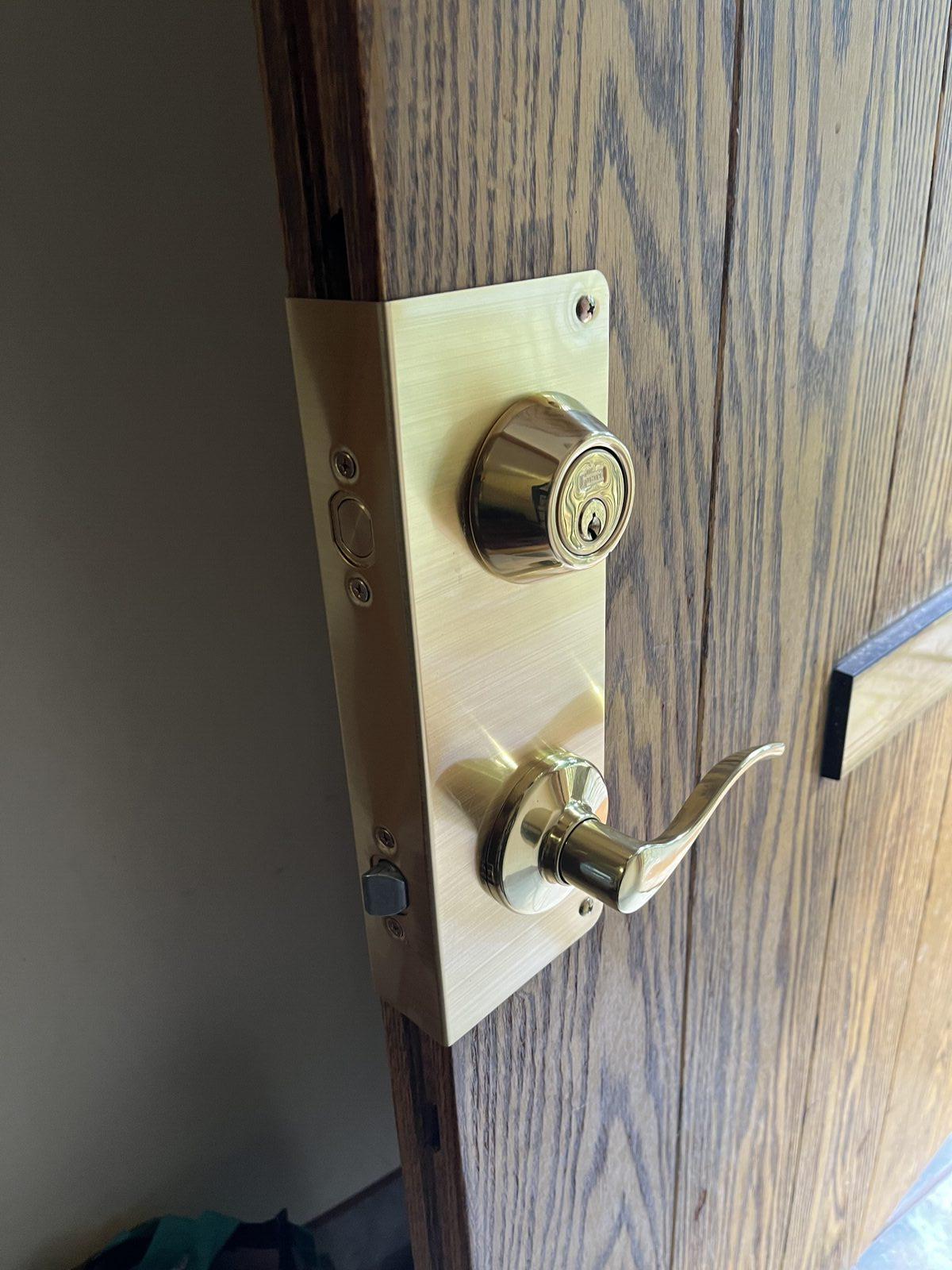
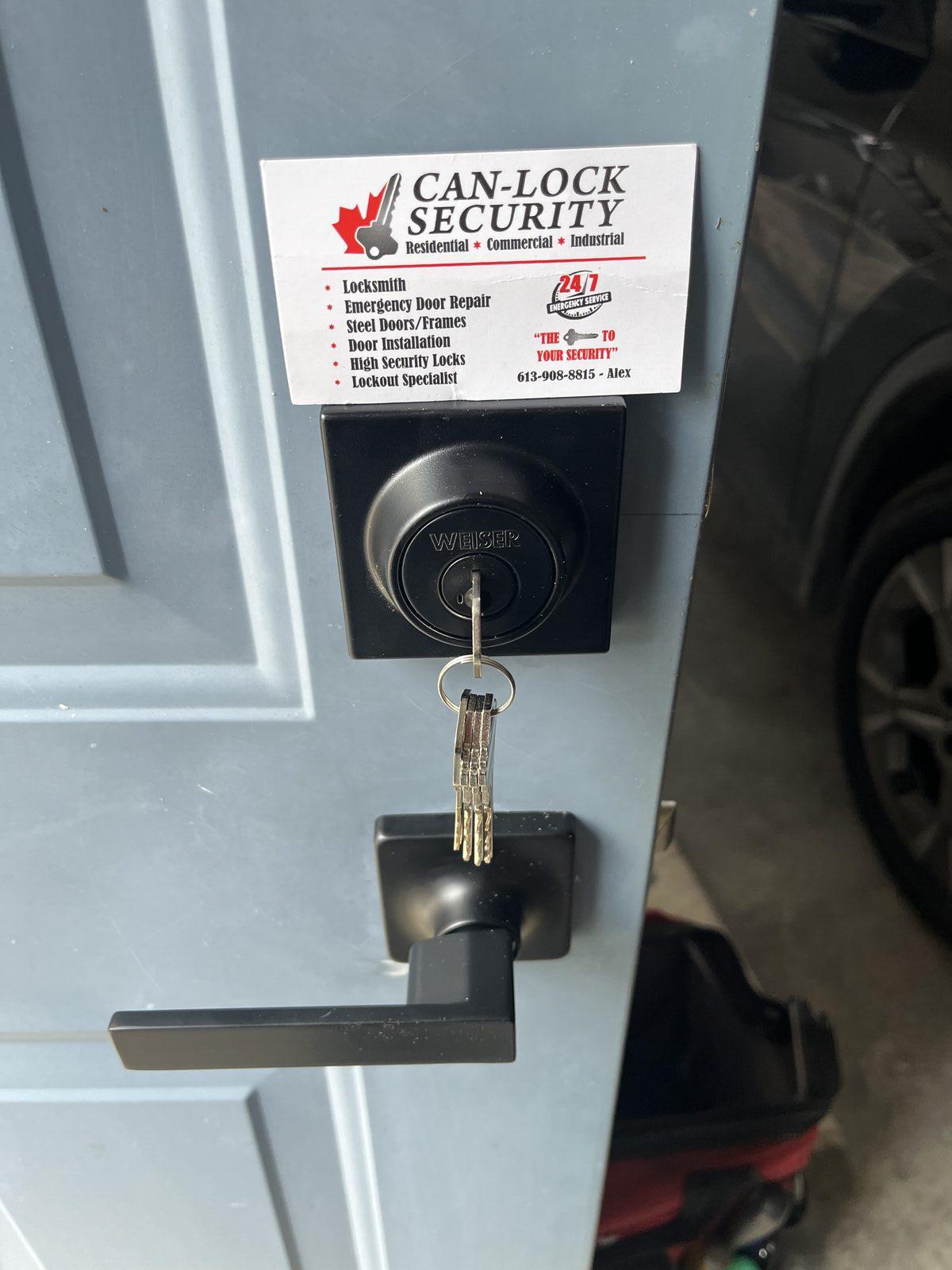
- Deadbolt Installation
- Time required
- Typically 45–90 minutes per door
- Lock type
- Residential deadbolt
Problem
A home needed a solid exterior deadbolt upgrade with keys that matched how the household actually used the door.
Solution
Installed a deadbolt suited to the door prep, verified strike alignment, and tested key operation before leaving.
Materials used
- Deadbolt set
- Strike plate
- Keys
What a proper deadbolt install actually includes
Installing a residential deadbolt is more than sliding a lock into an existing hole. Bore alignment, backset (commonly 2-3/8" or 2-3/4"), door thickness, and strike location determine whether the bolt throws fully without the homeowner leaning on the door. A deadbolt that only seats when the door is pushed is not finished work.
We select hardware suited to the door: grade and finish appropriate for an exterior entry, a strike plate that can take longer screws into structural framing where the jamb allows, and a keying plan that matches how the household wants to carry keys.
Upgrade versus replace-in-kind
Some GTA homes still rely on a spring latch alone on a side door or older primary entry. Adding a deadbolt there is a meaningful security step when the door and frame can accept the prep. Other jobs replace a worn or builder-grade deadbolt with a smoother, better-supported unit in the same bore.
If the jamb is split, the strike is floating in trim only, or the door is hollow in a way that will not hold hardware, we address reinforcement or door condition rather than pretending a premium cylinder fixes a weak frame.
Keying for real household use
Households often want the new deadbolt keyed alike to the existing entry knob or lever. That is usually possible when keyways match and the existing cylinder is serviceable enough to use as a reference. If keyways differ, options include rekeying compatible locks to one key or accepting separate keys and being honest about that trade-off.
After move-in, after roommate changes, or after contractor keys circulate, a fresh deadbolt install is a natural moment to retire old keys entirely. We cut the number of keys you ask for and test each one in the new cylinder before leaving.
Mississauga and GTA door realities
Suburban GTA housing stock mixes newer prepped doors with older wood doors that have been planed, weather-stripped, and adjusted through many seasons. Weatherstripping that is too proud can make a correctly installed deadbolt feel stiff. We account for that during strike and latch checks rather than blaming the homeowner’s technique.
Condo unit doors may be subject to corporation rules about exterior hardware appearance or fire listings. Corridor-side changes sometimes need approval; suite-side work is often more flexible. We work within those constraints when they apply.
Verification before handoff
Done means the bolt extends fully with the door at rest, retracts smoothly, and the key turns without fighting the cylinder. Interior thumbturns should operate without a fight. We check from outside and inside, and we confirm the door still self-latches under the closer or with a normal push if no closer is present.
This project page describes residential deadbolt installation of the kind pictured — hardware matched to prep, strike alignment verified, keys tested — not a fictional timed makeover or a guaranteed price for every door in the GTA.
Side doors, garage entries, and the “we forgot that one” problem
Primary front doors get the attention; side doors into kitchens, mudrooms, or attached garages often stay on a weak latch until something happens. When we install or upgrade a deadbolt on the main entry, we ask which other exterior doors should match. Keying three doors alike in one visit usually costs less friction than discovering later that the side door still uses the previous owner’s key.
Door viewers, wrap-around plates, and strike reinforcement are optional add-ons when the opening and budget call for them. They are not required on every job, and we will not upsell hardware that the jamb or door cannot support cleanly.
If you are mid-renovation and the slab or frame is changing soon, say so — installing finish hardware twice is avoidable when the carpentry schedule is known up front.
Frequently asked questions
Open a question for a short answer.
Many standard installs land around forty-five to ninety minutes per door when prep already exists. New prep or reinforcement adds time.
Often yes when the keyway is compatible. If not, we explain options before cutting keys so you are not surprised at handoff.
Single-cylinder with an interior thumbturn is the usual choice for primary egress because you can exit without finding a key. Double-cylinder is a special-case discussion involving nearby glass and emergency exit trade-offs.
Yes. Residential deadbolt work is common across our Toronto and GTA coverage areas.
We can discuss boring and prep when the door construction allows a clean, secure installation. Some doors are better served with different hardware approaches.
Where the jamb construction allows, longer screws that reach structural framing improve resistance to kick-in forces compared with short screws in trim only.
Yes when both openings are ready. We plan keying so both doors use the key arrangement you want before we leave.