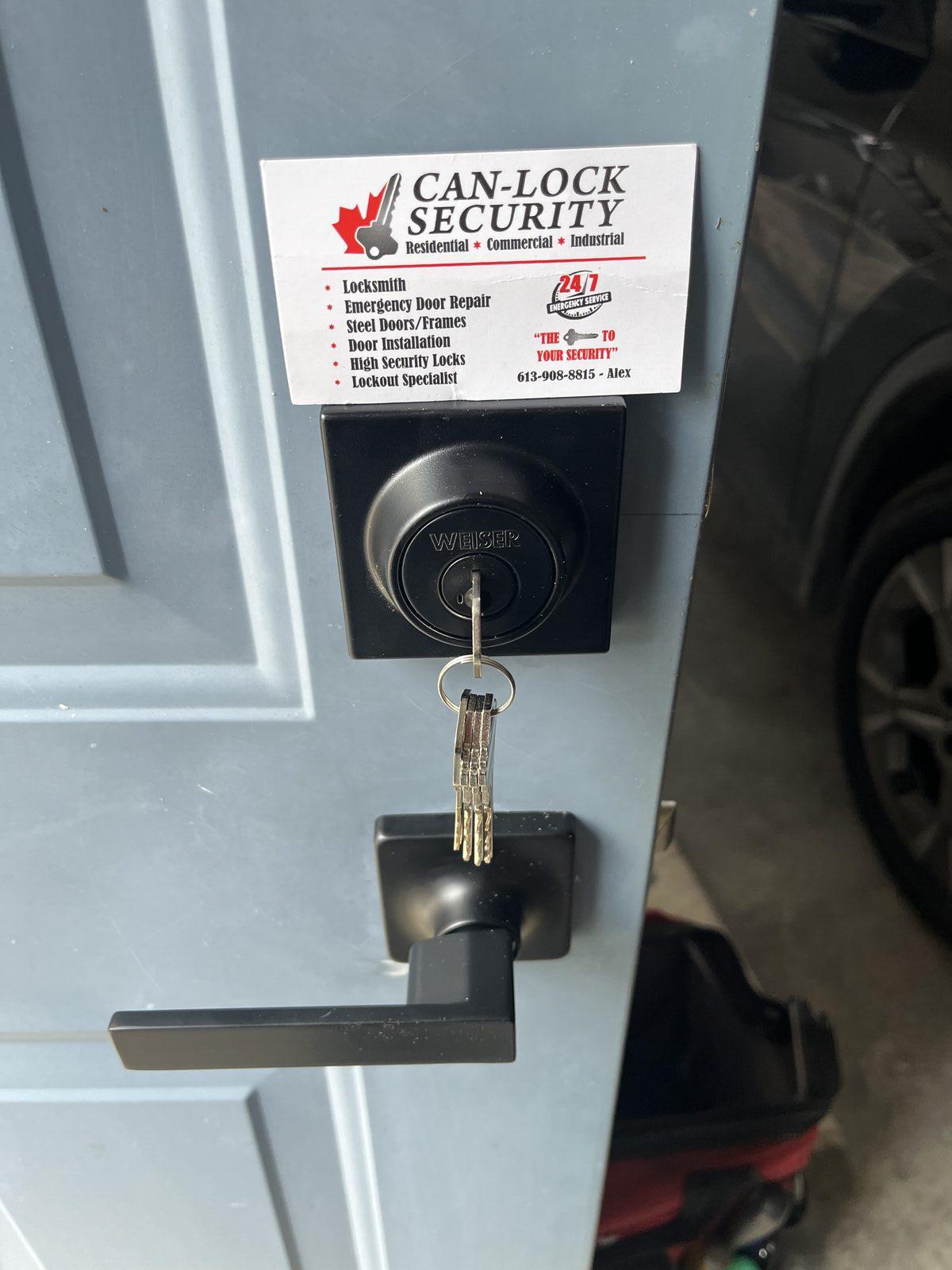
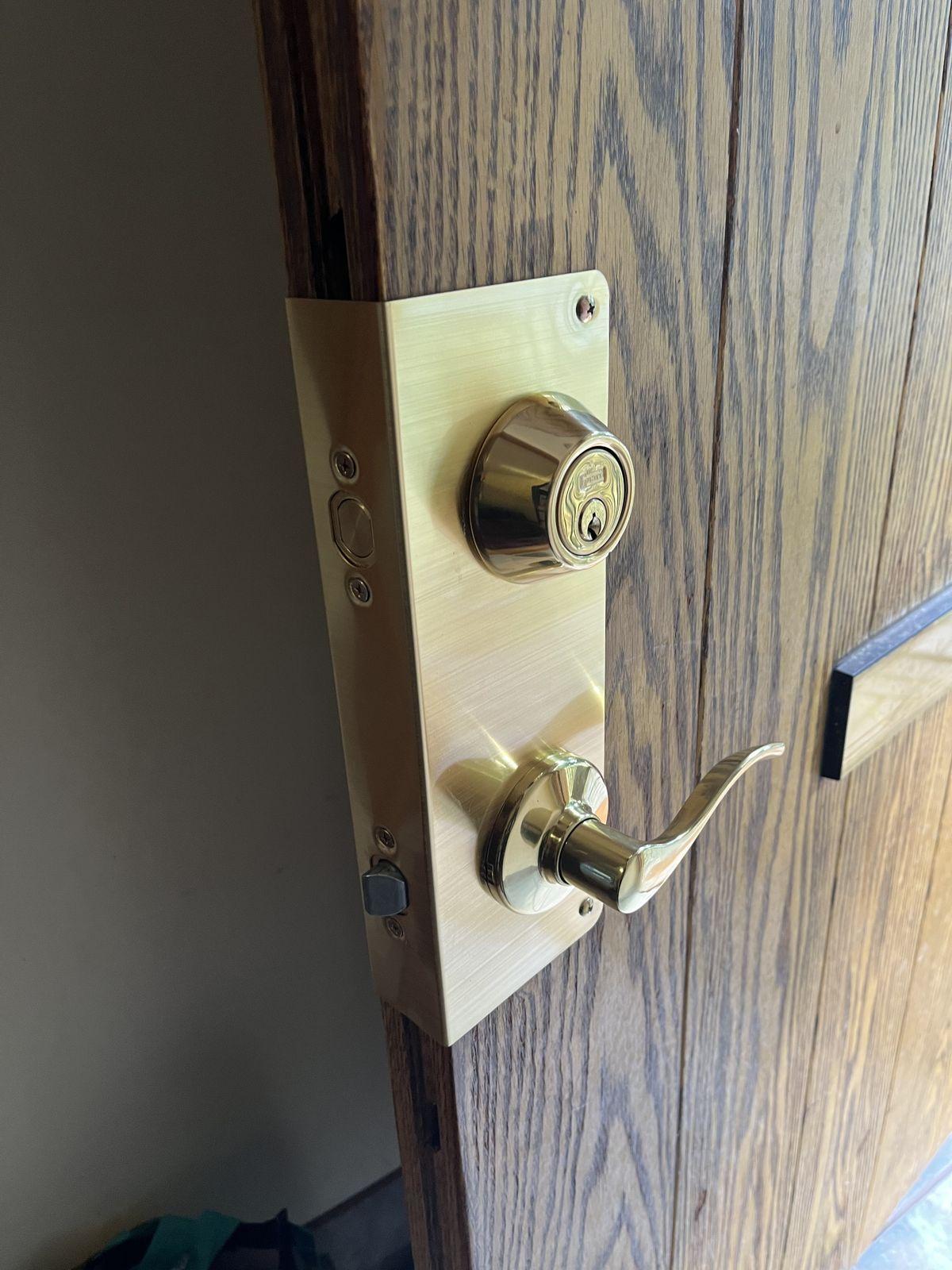
Whether you are upgrading a builder-grade latch in a Kanata subdivision or adding a proper deadbolt to an older Centretown entry, we measure backset and strike alignment on site so the new bolt seats cleanly. Mobile deadbolt installation is available throughout Ottawa and the Ottawa Valley.
A doorknob lock alone isn't much of a deterrent — most can be forced or manipulated without a great deal of effort. A deadbolt is the actual security layer on most residential and commercial doors, and whether you're adding one for the first time, replacing a worn one, or upgrading to a higher security grade, getting it installed correctly matters more than the hardware itself.
Situations That Call for Deadbolt Installation
- A door with no deadbolt at all, relying only on a knob or lever lock
- An existing deadbolt that's worn, damaged, or no longer functioning smoothly
- Wanting to upgrade to a higher security grade deadbolt
- A newly installed or replaced door that needs hardware fitted
- Moving from a single-cylinder to a double-cylinder deadbolt, or vice versa, based on your household's needs
Understanding Security Grades
Deadbolts are rated by grade, generally from Grade 3 (lightest duty, most common in budget builder-grade hardware) up to Grade 1 (commercial-grade, the most resistant to forced entry). Most homes are fitted with Grade 2 or Grade 3 hardware by default. Upgrading to Grade 1 residential hardware is a straightforward way to meaningfully improve a door's resistance to forced entry, without changing how the door looks or operates day to day.
What Installation Actually Involves
- Assessment of the door itself — thickness, material, and whether it can accept the deadbolt you're considering
- Boring or adjusting the door if new hardware doesn't match existing holes
- Installing the deadbolt and strike plate, with the strike plate properly reinforced for real resistance to forced entry
- Testing to confirm smooth operation and full engagement
- Key handoff, with a new working key set
Why the Strike Plate Matters as Much as the Deadbolt
A strong deadbolt installed with a standard, lightly secured strike plate is still vulnerable to a forceful kick or shoulder strike, since the weak point shifts to the frame rather than the lock itself. We reinforce the strike plate with longer screws that reach the framing behind the door jamb, which meaningfully improves actual forced-entry resistance beyond what the deadbolt alone provides.
Single-Cylinder vs. Double-Cylinder Deadbolts
A single-cylinder deadbolt uses a key on the outside and a thumb-turn on the inside — the standard choice for most homes. A double-cylinder deadbolt requires a key on both sides, which can add security near a door with a nearby window, but it also means needing a key to exit from the inside, which some households and fire safety considerations weigh against. We can talk through which makes sense for your specific door.
Why Choose Can-Lock Security for Deadbolt Installation
Can-Lock Security is a mobile, family-owned locksmith that installs deadbolts properly, including strike plate reinforcement that's often skipped in a quick hardware-store installation. We recommend a security grade that fits your actual situation, not automatically the most expensive option.
Book Your Deadbolt Installation
Whether it's a first deadbolt, a replacement, or a security upgrade, Can-Lock Security can install it properly. Reach out to schedule.
Related pages: High-Security Locks | Residential Lock Replacement | Smart Lock Installation | Residential Locksmith Services