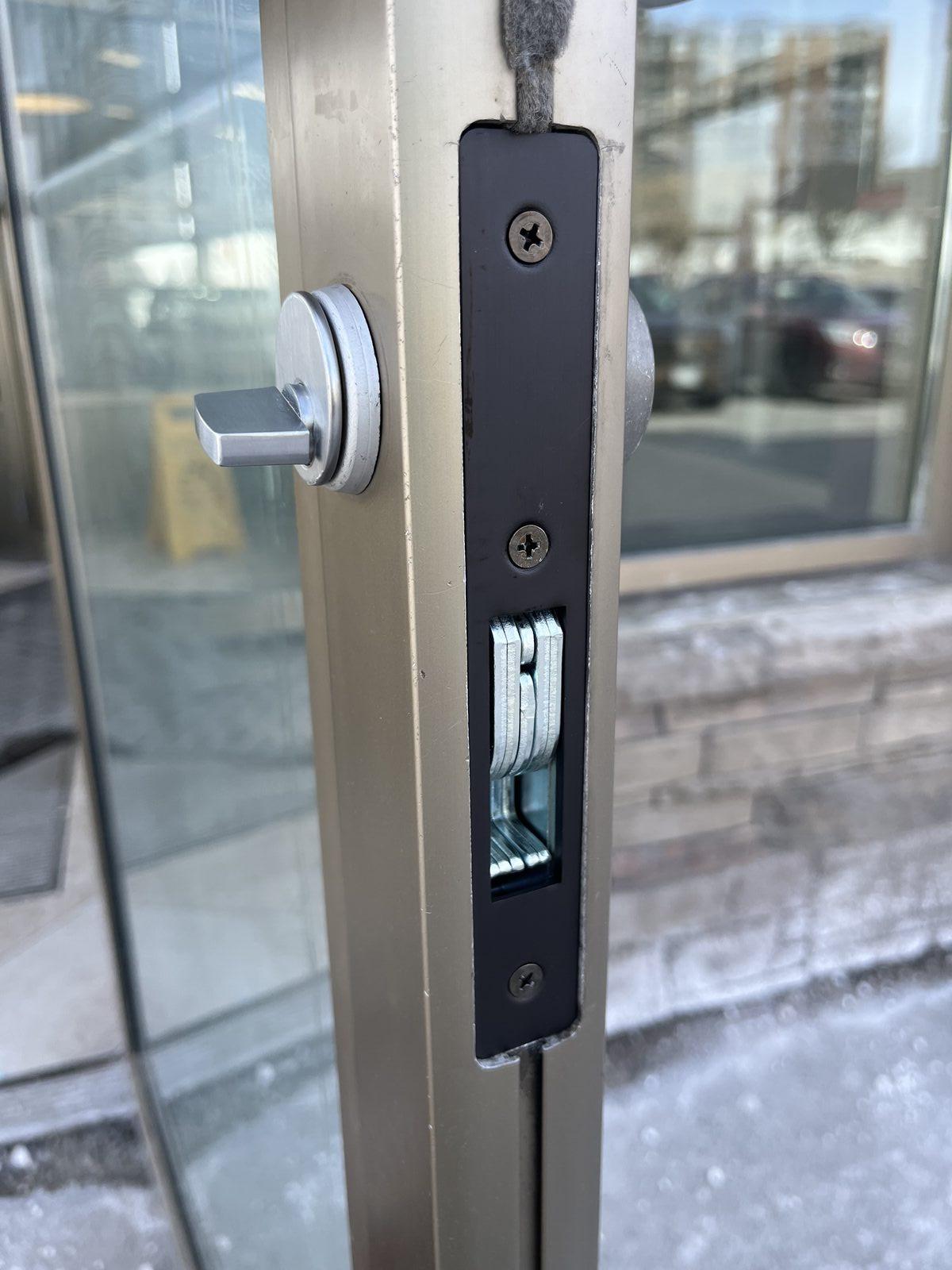
Entry door lock hardware
Your Door and Your Locks Are More Connected Than You Think
We get called out constantly across Toronto and the GTA for "lock problems" that turn out to actually be door problems. A deadbolt that won't throw fully, a key that suddenly needs extra force, a door that's hard to lock at all: in a surprising number of cases, the lock itself is fine, and the real issue is the door around it. Catching these signs before winter matters, because cold temperatures and moisture make an already-struggling door significantly worse, and fast.
Doors That Rub or Stick
If your entry door drags along the floor or frame, or needs a shove to close fully, something has shifted, whether that's the door itself, the frame, or the foundation settling slightly over time. A rubbing door puts constant pressure on the lock mechanism every time you use it, which accelerates wear on hardware that would otherwise last for years.
Sagging Doors
A sagging door, one that's visibly lower on the latch side than the hinge side, is usually caused by worn hinges or a frame that's shifted out of square. This isn't just cosmetic. A sagging door often means your deadbolt and strike plate are no longer perfectly aligned, which can prevent the bolt from throwing completely even though the lock itself works fine.
Misaligned Locks and Deadbolts
When a door shifts even slightly, whether from seasonal humidity, settling, or worn hardware, the deadbolt and strike plate can fall out of alignment. This often shows up as needing to lift or push the door in a specific direction to get the bolt to line up, a small daily annoyance that's actually telling you the door needs attention, not the lock.
Drafts Around the Door
Run your hand around the edges of your closed door on a windy day. Any noticeable draft means the seal has failed somewhere, whether from worn weatherstripping, a warped door, or a frame that's no longer square. Besides the obvious energy cost, that gap is also letting in the moisture that leads to rust and corrosion inside your lock hardware over time.
Water Leaks
Water pooling at the threshold, staining on the door itself, or moisture inside the door frame is a serious sign that shouldn't wait until spring. Water exposure damages door materials, especially wood components, and it's directly connected to the rust and internal corrosion we see in locks on doors with ongoing leak problems.
Worn Weatherstripping
Weatherstripping is one of the most overlooked, most inexpensive fixes available, and it has a direct impact on how well your door seals against cold air and moisture. If it's cracked, flattened, or missing sections, replacing it before winter is one of the best value repairs a homeowner can make, both for comfort and for protecting the hardware behind it.
Loose Hinges
Loose or worn hinges let a door shift slightly every time it's used, which compounds over time into misalignment problems with the lock, sagging, and increased strain on the deadbolt. Tightening or replacing hinges is often a simple fix that prevents several other problems on this list from developing further.
Damaged Thresholds
A cracked, warped, or gapping threshold at the bottom of the door lets in cold air, moisture, and sometimes pests, and it's also a sign the door isn't sealing properly overall. Threshold damage often accompanies other issues on this list rather than appearing alone, so if you spot it, it's worth having the whole door assessed.
The Security Risk of a Poorly Fitting Door
Beyond comfort and energy costs, a poorly fitting door is a genuine security weakness. A deadbolt that doesn't throw completely because the door has shifted provides significantly less resistance to forced entry than one that's properly aligned, even though the lock hardware itself might be in perfect condition. This is exactly why "the lock is fine, it's the door" is such a common and important distinction for us to make on service calls.
Why Repairing Early Prevents Costly Winter Damage
Every issue on this list gets worse with cold weather, not better. A minor draft becomes a significant heat loss problem once temperatures drop. A slight misalignment becomes a lock that won't throw at all once the door swells or shifts further with winter humidity changes. Water damage that seems minor in October can freeze, expand, and cause structural damage by January. Addressing these signs now, while repairs are simpler and less urgent, is almost always cheaper than waiting until the problem forces an emergency call in the middle of winter.
Final Word
Most entry door problems don't announce themselves loudly. They show up as small annoyances, a stiff lock, a slight draft, a door that needs a little extra push, and it's easy to live with them for months before recognizing they're connected. Catching these signs before winter prevents both a bigger repair bill and a real security gap.
Can-Lock Security repairs entry doors, locks, and hardware for homes across Toronto and the GTA, including North York, Scarborough, Etobicoke, Mississauga, and Vaughan. If your door has been giving you trouble, get it looked at before the cold weather makes it worse.
Toronto/GTA: 647-975-1702
Suggested internal links: Door Repair, Emergency Door Repair, Weatherstripping, Residential Locksmith, Lock Repair, Deadbolt Installation
FAQs
Open a question for a short answer.
If the key turns smoothly but the bolt won't fully extend, or if the door needs to be lifted or pushed to get the lock to catch, the door alignment is usually the actual issue rather than the lock hardware itself.
Often, yes. Hinge adjustments, shimming, or a frame repair can correct sagging without requiring full door replacement, depending on the extent of the damage.
Weatherstripping replacement is a reasonable DIY project for many homeowners. If it's paired with alignment issues or a door that doesn't close properly, professional assessment is worthwhile.
Weatherstripping degrades gradually, and small amounts of frame movement accumulate over time, so a draft that was barely noticeable last year can become clearly noticeable as those small changes add up.
Before. Water damage that goes untreated through a winter freeze-thaw cycle tends to expand and worsen significantly, turning a moderate repair into a more serious one.
RELATED DIVISION · OTTAWA
We recommend Fix My Door Now Ottawa
For specialized door repair and installation in Ottawa & the Valley, our related division Fix My Door Now Ottawa is the team we point customers to: