
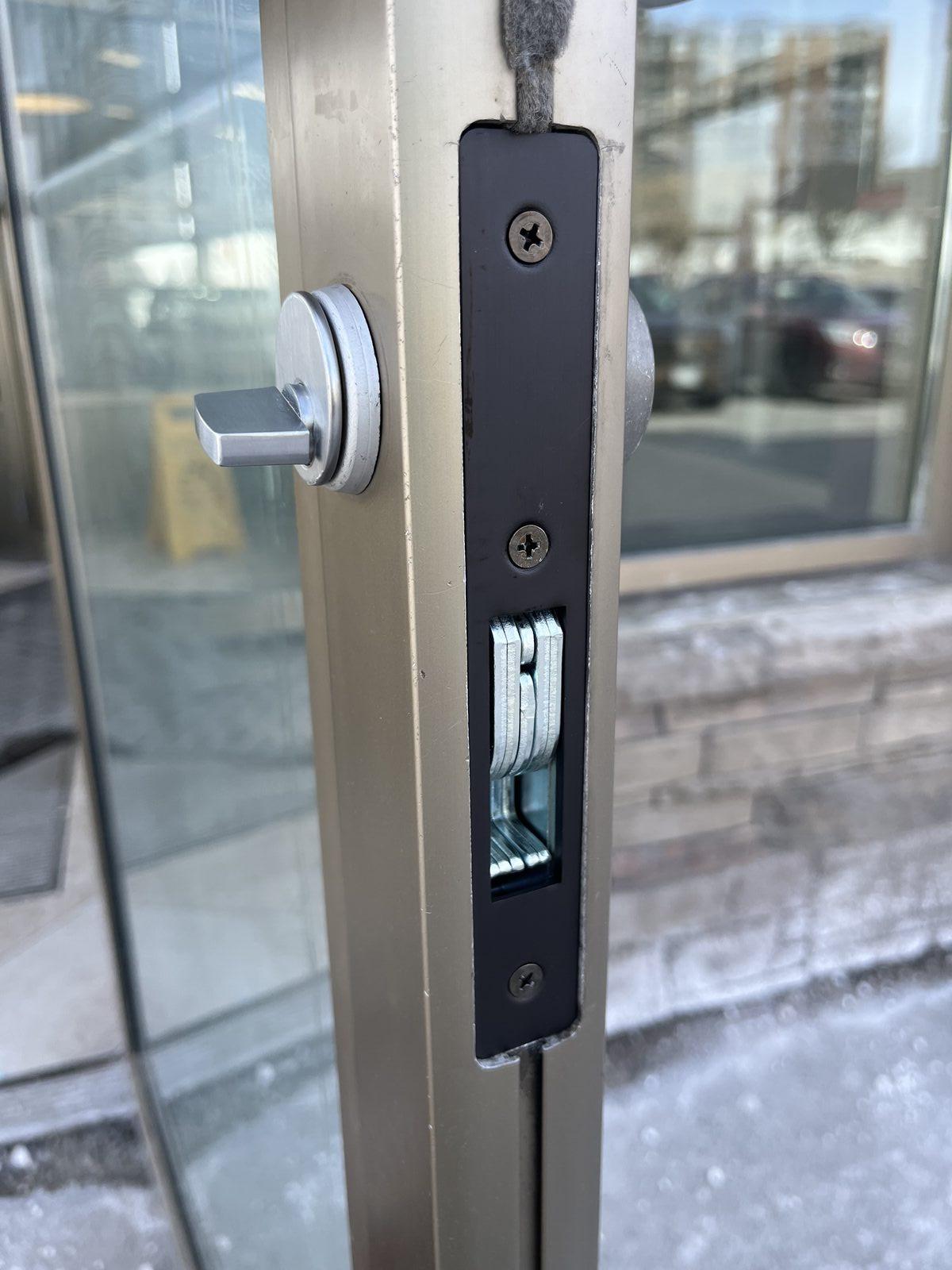
Door and multi-point hardware alignment
It's Rarely Just the Lock
"My door won't close properly" is one of the most common complaints we hear, and it's rarely a simple lock problem on its own. In the vast majority of cases, something about the door itself, the frame, the hinges, or the surrounding structure has shifted, and the lock is just the part you notice first because it's the part you interact with every day.
Seasonal Expansion and Contraction
Wood and even some composite door materials expand and contract with temperature and humidity changes throughout the year. A door that closed perfectly in July can feel noticeably tighter by October as humidity levels shift, and tighter still through the coldest, driest stretch of winter. This is completely normal to some degree, but a door that goes from "slightly different by season" to "genuinely difficult to close" usually has an underlying issue beyond simple seasonal movement.
Humidity's Role in Door Problems
Ontario's seasonal humidity swings, from muggy summers to dry winter air inside a heated home, put real stress on door materials over the years. This is especially noticeable in solid wood doors, but even steel and fiberglass doors with wood cores can shift slightly as internal moisture content changes. Over several years, this repeated cycle can gradually work a door out of its ideal fit, even without any single dramatic event causing it.
House Settling Over Time
All homes settle to some degree as the years go by, and older homes across Toronto's established neighbourhoods often show this more visibly than newer GTA subdivisions still in their first decade. Settling can shift a door frame slightly out of square, which changes how the door meets the frame and how well the latch or deadbolt lines up with the strike plate. This kind of movement tends to be gradual and permanent, meaning weatherstripping or lubrication alone won't fully resolve it.
Worn Hinges
Hinges bear the entire weight of a door every time it's opened and closed, thousands of times a year for a main entry door. Over time, hinge pins wear, screws loosen in the surrounding wood, and the door can develop a slight sag that changes how it meets the frame. This is one of the more straightforward fixes on this list, often resolved with new screws, hinge pins, or in more worn cases, full hinge replacement.
Misaligned Strike Plates
The strike plate is the small metal piece on the door frame that the deadbolt or latch extends into. If a door has shifted even slightly, whether from settling, humidity, or worn hinges, the strike plate can fall out of alignment with the bolt, making it difficult or impossible to lock the door fully. This is an extremely common cause of "my deadbolt won't throw" complaints that turn out to have nothing wrong with the lock itself.
Broken Door Closers
For commercial doors and some higher-end residential entries with a door closer mechanism, a failing closer can prevent a door from closing fully or cause it to close too hard, both of which put ongoing stress on the lock and frame. Closers are mechanical devices with a working lifespan, and a closer that's leaking fluid, slamming, or failing to fully latch the door needs attention before it damages surrounding hardware.
Commercial Entry Doors Have Their Own Challenges
Commercial doors deal with far higher daily traffic than residential doors, often hundreds of open-and-close cycles a day compared to a few dozen at most in a home. This accelerates wear on hinges, closers, and strike plates considerably, and commercial doors are also more likely to be propped open at some point, which puts unusual stress on hardware never designed for that kind of use. Businesses across Toronto and the GTA often find their entry door issues stem from this accumulated daily wear rather than any single event.
Patio Doors Are a Different Problem Entirely
Sliding patio doors don't hinge and settle the way swing doors do, but they have their own version of this problem: tracks that accumulate dirt and debris, rollers that wear down over years of use, and frames that can warp slightly with humidity and temperature swings. A patio door that's hard to slide or doesn't latch properly is usually a track or roller issue rather than anything to do with the lock hardware itself, though a poorly closing patio door absolutely undermines the security value of even a good lock.
Common Homeowner Fixes vs Professional Repairs
Some door alignment issues are simple enough to address yourself: tightening loose hinge screws, adjusting a strike plate slightly with a file, or cleaning out a patio door track. Others, particularly frame issues from settling, significant hinge wear, or a door that's genuinely out of square, are better handled by a professional who can assess whether the fix is in the door, the frame, or both. Forcing a misaligned door to close, or repeatedly adjusting a lock to compensate for a door problem, tends to accelerate wear on the lock itself without addressing the actual cause.
Preventing Lock Damage Caused by Door Misalignment
A door that's slightly out of alignment puts extra stress on the deadbolt and strike plate every single time it's locked, which wears down lock hardware faster than normal use would. This is exactly why we see perfectly good locks fail early on doors with underlying alignment problems, and it's also why fixing the door itself, rather than just replacing the lock, is often the more complete and cost-effective solution.
Final Word
A door that won't close properly is almost always telling you something about the door or frame, not just the lock. Chasing the symptom by repeatedly adjusting or replacing the lock, without addressing seasonal movement, worn hinges, or frame alignment, tends to be a cycle that repeats itself every year. Fixing the actual cause is usually less work in the long run.
Can-Lock Security repairs residential and commercial entry doors, including hinge, strike plate, and closer repairs, for properties across Toronto and the GTA, including North York, Scarborough, Etobicoke, Mississauga, and Markham. If your door has been fighting you all season, we can find out why.
Toronto/GTA: 647-975-1702
Suggested internal links: Door Repair, Commercial Door Repair, Emergency Door Repair, Weatherstripping, Residential Locksmith, Lock Repair, Deadbolt Installation
FAQs
Open a question for a short answer.
Seasonal humidity changes cause wood and composite doors to expand and contract, and dry winter air combined with a heated home interior can shift a door's fit compared to a humid summer.
Minor misalignment can sometimes be corrected with a file or by adjusting the plate's position slightly. More significant misalignment usually points to a frame issue that benefits from professional assessment.
Often, yes, but not always. Frame settling can produce similar symptoms, so it's worth having both checked if adjusting the hinges doesn't fully resolve the sag.
Commercial doors see far more daily open-and-close cycles, often hundreds a day, which accelerates wear on hinges, closers, and strike plates compared to typical residential use.
Usually not as the first step. Address the underlying door or frame alignment issue first, since a new lock installed on a misaligned door will develop the same problems over time.
RELATED DIVISION · OTTAWA
We recommend Fix My Door Now Ottawa
For specialized door repair and installation in Ottawa & the Valley, our related division Fix My Door Now Ottawa is the team we point customers to: