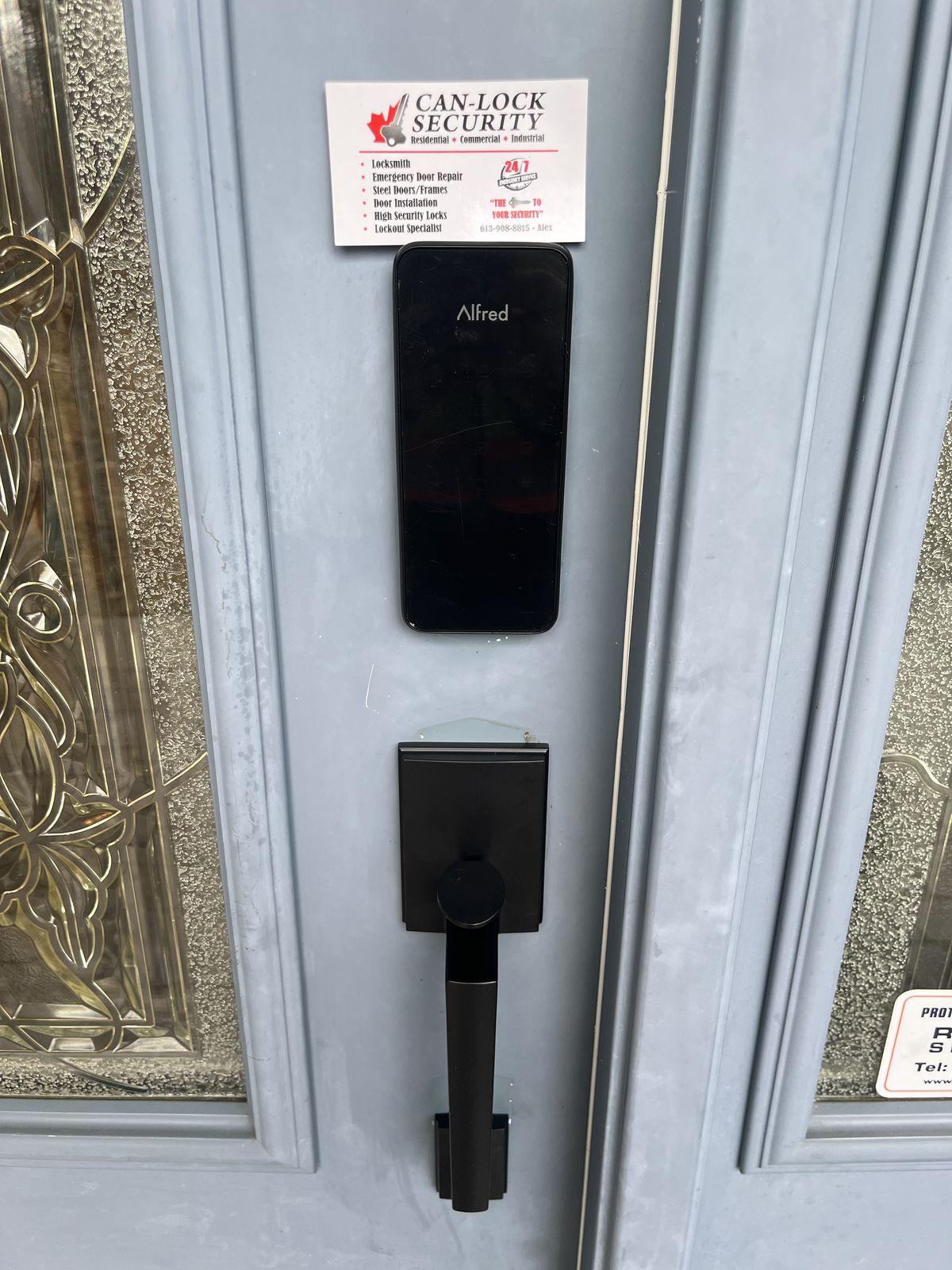
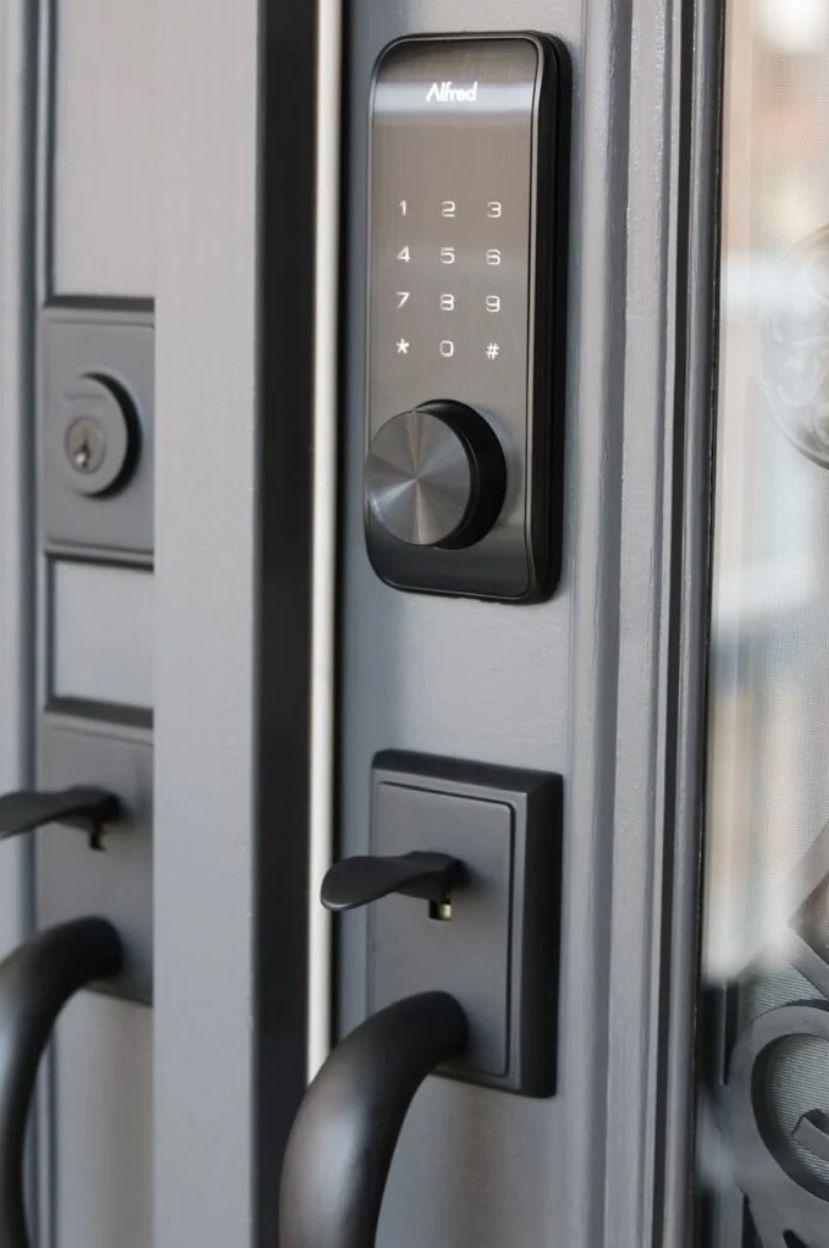
Smart lock installation
There's No Single Right Answer for Every Home
We get asked constantly by Ottawa homeowners whether smart locks or traditional deadbolts are the better choice, and the honest answer is that it depends more on your household than on which technology is objectively superior. Both have real strengths, and both have specific weaknesses that show up more in an Ottawa climate than they might somewhere milder. Here's how they actually compare, not in marketing terms, but based on what we see installing and servicing both across Ottawa and the GTA.
Reliability: Mechanical vs Electronic
A traditional deadbolt is about as simple as home security hardware gets: a key, a cylinder, pins, and a bolt. There's very little to fail, and when something does go wrong, it's usually a straightforward mechanical fix. That simplicity is exactly why deadbolts have remained the standard for decades. There's no battery to die, no software to malfunction, and no wireless connection to drop.
Smart locks add real value but also add points of failure: batteries, circuit boards, motors, and often a connection to your home Wi-Fi or a hub. Most quality smart locks are reliable in normal conditions, but they're mechanically more complex, which means there's simply more that can go wrong compared to a deadbolt.
Battery Life in Winter
This is where Ottawa's climate becomes a real factor rather than a minor consideration. Lithium batteries lose capacity in cold temperatures, and a smart lock mounted on an exterior door, especially one without a heated vestibule, can see noticeably shorter battery life through December, January, and February than the manufacturer's stated average suggests.
This isn't a reason to avoid smart locks entirely, but it is a reason to choose a model with a genuine cold-weather rating, check battery levels more often through the winter than the rest of the year, and make sure whatever model you choose has a mechanical key override so you're never fully stranded by a dead battery on the coldest night of the year.
Convenience: Where Smart Locks Win Clearly
If your household includes kids coming and going, a dog walker, a cleaner, or family members who visit on a regular but not identical schedule, smart locks solve a real problem that traditional deadbolts simply can't. Temporary codes, activity logs showing exactly when the door was used, and remote locking from your phone are meaningful conveniences, not just novelties. For a lot of busy Ontario families, this alone tips the decision in favour of a smart lock.
Security: A Closer Look
Security-wise, the comparison is closer than people expect. A well-built smart lock from a reputable manufacturer offers comparable resistance to picking and forced entry as a good traditional deadbolt, since many use the same underlying mechanical cylinder with electronic features layered on top. The security gap that actually matters is between quality and cheap hardware, not between smart and traditional as categories. A poorly made smart lock is a security downgrade. A well-made one, installed correctly, is not.
Where smart locks add a genuine security advantage is in reducing the number of doors left unlocked by accident, since auto-locking features and phone alerts catch a problem that a traditional deadbolt simply can't flag on its own.
Installation Differences
Traditional deadbolt installation is quick and straightforward for most standard doors. Smart lock installation takes a bit longer, since it typically involves matching the lock to your door's specific bore and backset measurements, connecting to your home network if the model requires it, and walking through the app setup so codes and permissions are configured correctly from day one. It's not difficult, but it benefits from professional installation more than a standard deadbolt does, particularly if you want it done right the first time rather than troubleshooting connectivity issues later.
Best Use Cases for Each
Traditional deadbolts make the most sense for:
- Secondary or rarely used entry doors, like a garage man-door or a shed
- Homeowners who want the simplest, lowest-maintenance option
- Anyone uneasy about connected devices or home network dependency
Smart locks make the most sense for:
- Busy families managing multiple people's access on different schedules
- Homeowners who travel frequently and want remote control over entry
- Rental properties where codes can be changed between tenants without a locksmith visit for every turnover
Can You Use Both?
Yes, and many Ontario homeowners land here. It's common to install a smart lock on the main entry door where convenience matters most, while keeping a traditional high-security deadbolt on secondary doors like a garage entry or basement walkout. This gets you the convenience where it counts most, without paying for smart features on doors that rarely need them.
Final Word
Neither option is universally better. Traditional deadbolts remain the simplest, most dependable choice, especially for doors that don't need extra features. Smart locks earn their cost through genuine convenience for busy households, provided you choose a model built to handle Ontario winters and keep an eye on batteries through the season.
Can-Lock Security installs and services both traditional deadbolts and smart locks for homeowners across Ottawa, Kanata, Nepean, Barrhaven, Stittsville, Orleans, Arnprior, Renfrew, and the GTA including Toronto, Mississauga, and Vaughan. If you're not sure which is the right fit, we're happy to talk through your household's specific needs before recommending anything.
Ottawa: 613-908-8815 | Toronto/GTA: 647-975-1702
Suggested internal links: Smart Lock Installation, High-Security Locks, Residential Locksmith, Lock Replacement, Deadbolt Installation
FAQs
Open a question for a short answer.
Many do, provided you choose a model with a genuine cold-weather rating and a mechanical key backup, and stay on top of battery levels through the coldest months.
Not inherently. Security depends more on the build quality of the specific lock than on whether it's electronic or mechanical. A high-quality smart lock is comparable to a high-quality traditional deadbolt.
It's not strictly required, but it reduces the risk of connectivity issues, incorrect fitting, or setup mistakes, particularly for homeowners less comfortable with the app-based configuration.
In most cases, yes, though it depends on your door's setup. A locksmith can confirm compatibility and recommend the best configuration for your specific door.
Smart locks are often preferred for rentals since codes can be changed between tenants without a locksmith visit, though a straightforward rekey between tenants with a traditional deadbolt works well too.
Educational video: “Ultimate Smart Lock Comparison” (not affiliated with Can-Lock Security).