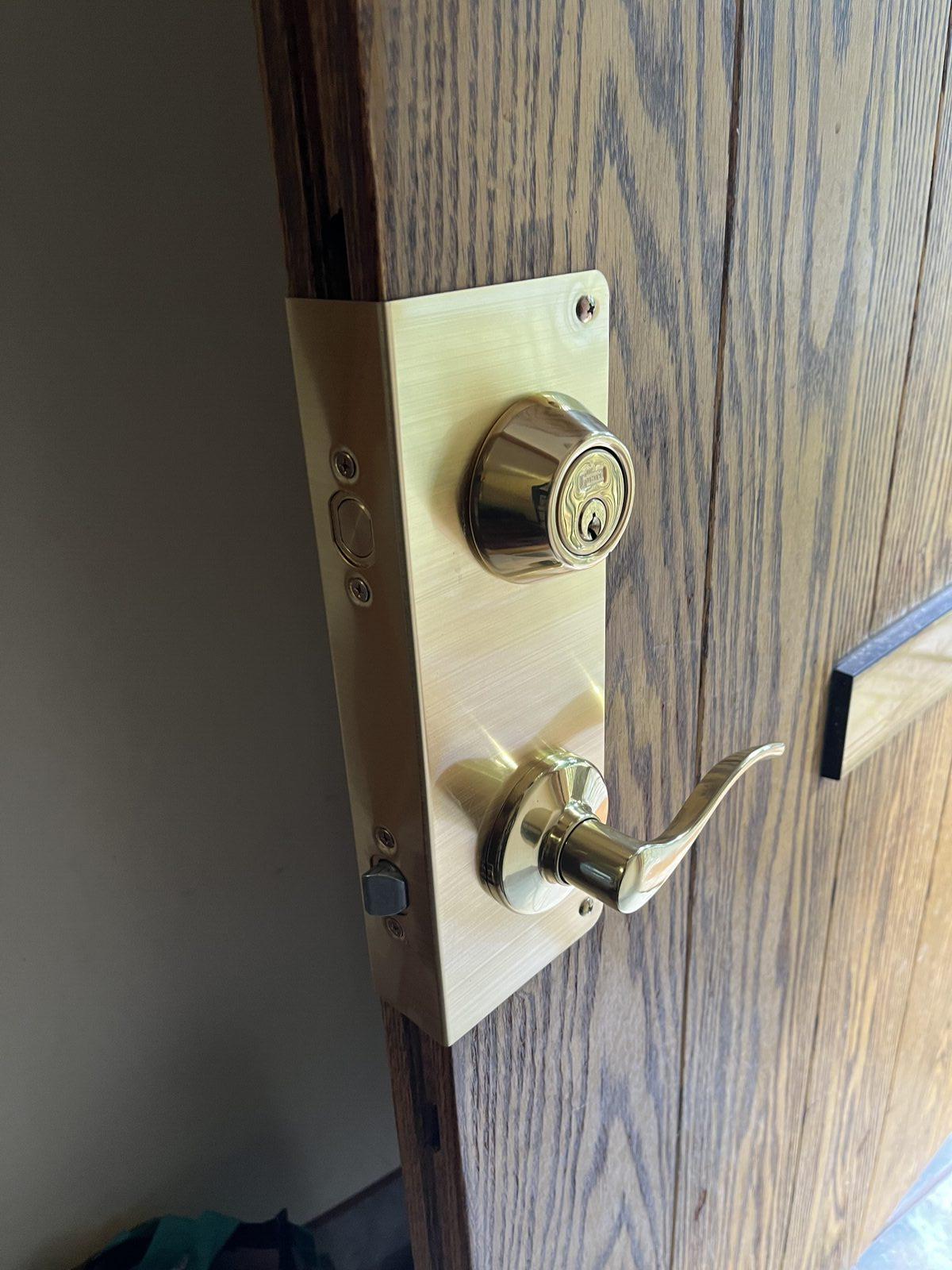
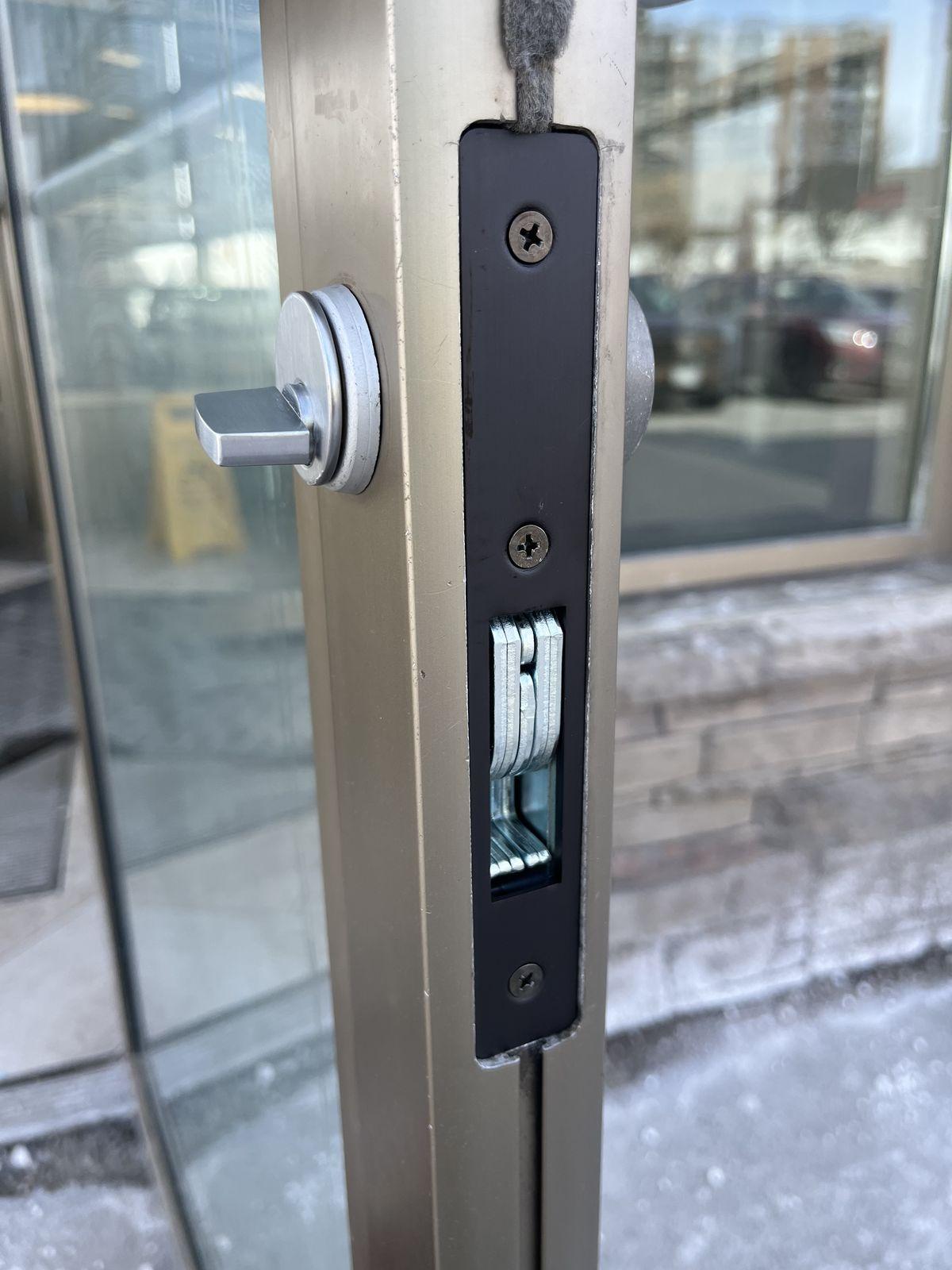
- City
- Toronto, Ontario
- Service performed
- Commercial Locksmith
- Time required
- Typically 1–2 hours for standard storefront service
- Lock type
- Narrow-stile storefront mortise / deadlatch
Problem
A glass storefront entry needed dependable latching and interior thumbturn control without unnecessary downtime during business hours.
Solution
Diagnosed the storefront mechanism, completed the agreed hardware work, and tested latch engagement from both sides before leaving.
Materials used
- Storefront lock / deadlatch components
- Faceplate hardware
- Thumbturn / cylinder as required
Storefront locks are their own hardware family
Glass aluminum storefront doors commonly use narrow-stile mortise locks or deadlatches designed for thin mid-rails, not residential bored cylindrical locks. Faceplates, armored fronts, hook bolts, and short backsets are normal. Diagnosing a storefront complaint starts with identifying that mechanism — not assuming a deadbolt kit from a big-box aisle will fit.
Failures show up as a door that will not latch into the threshold or strike, a thumbturn that spins without throwing the bolt, a key that turns with no cam action, or a latch that catches only when someone lifts the door. Those symptoms can come from the lock case, the cylinder, the threshold strike, or hinge/pivot wear that dropped the door out of alignment.
Working around business hours
Retail and clinic entries in the GTA rarely want an all-day outage. Good storefront service plans the sequence: secure temporary latching if needed, replace or repair the agreed components, then test from the sidewalk and from inside before leaving. Thumbturn control for staff locking up at night is verified deliberately — many “lock problems” are actually interior operators that no longer drive the case.
When only the cylinder is worn, swapping the cylinder and cutting keys can restore key control quickly. When the mortise case itself is cracked or the latch is rounded off from years of slam closings, case replacement or a full lock rebuild is the honest scope.
Alignment is half the job
A perfect new lock in a dropped door will still bind. We check pivot or hinge condition, whether the door drags on the threshold, and whether the strike or keeper still lines up with the latch throw. Seasonal temperature swings across the GTA move aluminum and glass assemblies enough that a lock tuned in July can start clipping in January.
Threshold strikes collect dirt and metal shavings; a quick clean and fastener check sometimes restores latching that looked like a “bad lock” on the phone. We still open the case when symptoms point inside, rather than stopping at a superficial clean.
Keying for staff and after-hours access
Storefront cylinders are often on a shop key that also works a rear exit or a rolling grate. Changing one cylinder without a keying plan can orphan keys staff still need elsewhere. We ask how the opening is supposed to fit the rest of the suite before pinning or replacing cylinders.
High-turnover retail may want keyed-alike pairs of front doors or a simple master arrangement for managers. Those conversations belong at the start of the visit, not after keys are already cut.
What this project represents
The photo and summary reflect storefront lock work typical of glass commercial entries in Toronto and the wider GTA — mechanism diagnosis, hardware work agreed on site, and latch tested from both sides. We do not invent a plaza name or claim a fixed price here; stile width, lock brand, and how misaligned the door is all change the ticket.
If you are comparing pages, commercial locksmith and broken-lock service pages describe offerings; this project page focuses on the storefront mechanism itself and the practical constraints of keeping a business entrance usable.
Common storefront mistakes we undo
Over-lubricating a mortise case with the wrong product attracts grit and turns a sticky lock into a grinding one. Forcing a residential cylinder into a commercial housing, or swapping faceplates that no longer cover the prep cleanly, also shows up on callbacks. We correct those patterns when we find them and leave hardware that matches the stile it sits in.
Another frequent issue is a door closer cranked too strong after a windy week, slamming the latch into the strike until the latch nose rounds off. Adjusting the closer and dressing or replacing the latch together lasts longer than replacing the latch alone while the closer still hammer-closes every customer exit.
Frequently asked questions
Open a question for a short answer.
Usually not. Narrow-stile storefront locks use different cases, faceplates, and cylinders. Using the wrong hardware wastes time and can damage the stile.
That often points to door sag or strike misalignment rather than a dead cylinder alone. Both the hanging and the lock need checking.
Yes when the case and cam are sound. Worn or damaged cylinders are replaced; healthy ones can often be rekeyed.
We diagnose first, confirm scope, then complete the mechanical work and testing in a tight sequence so the entry is not left unusable longer than necessary.
Yes. Storefront lock work is a regular commercial request across our Toronto and GTA service areas.
Always. Staff rely on interior control at closing; customers and managers rely on exterior key or credential entry. Both paths matter.
We check that leaf’s lock, strike, and hanging first, then confirm the active/inactive leaf roles so the pair still meets how the entrance is supposed to secure at night.