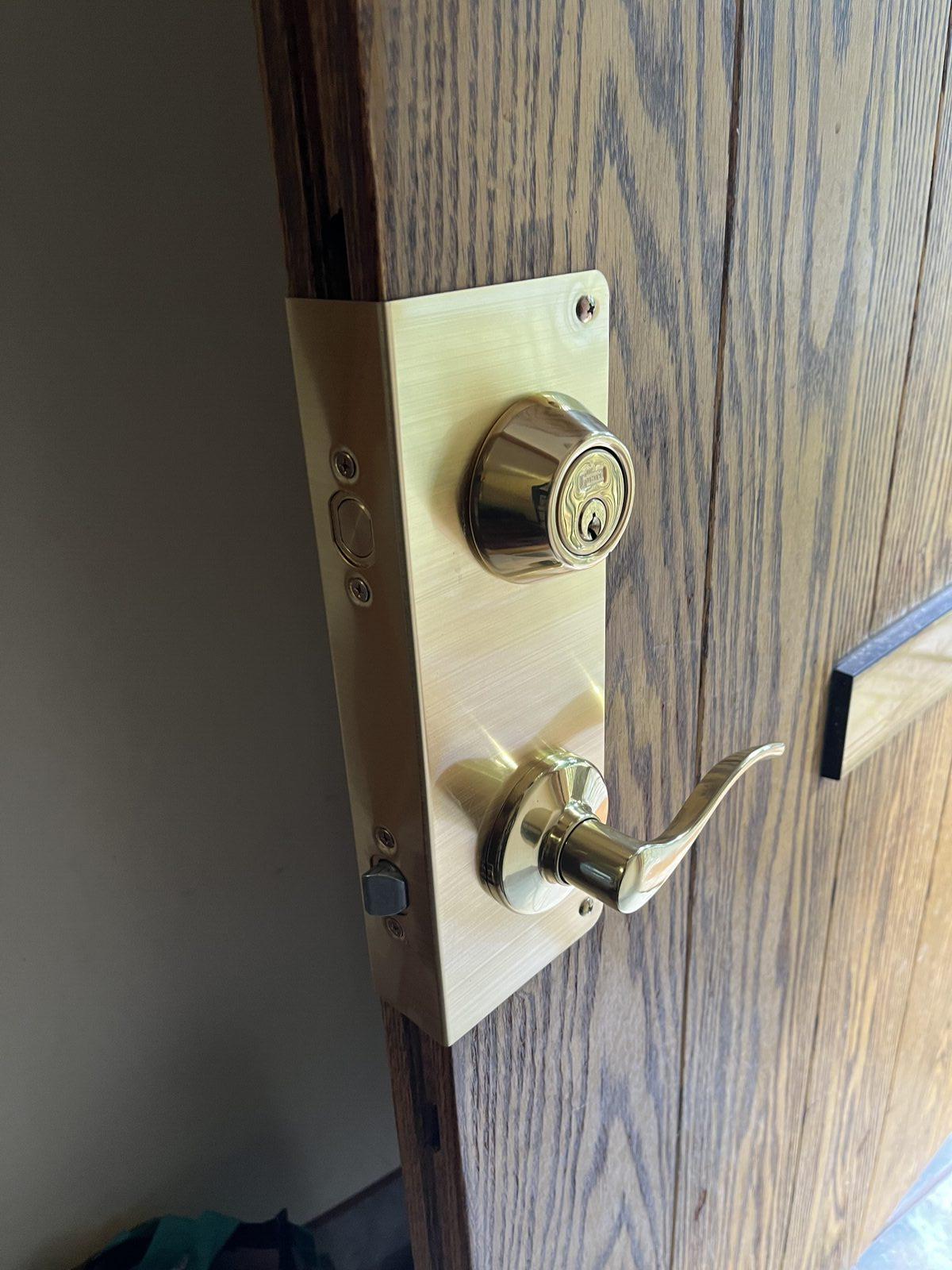
Before
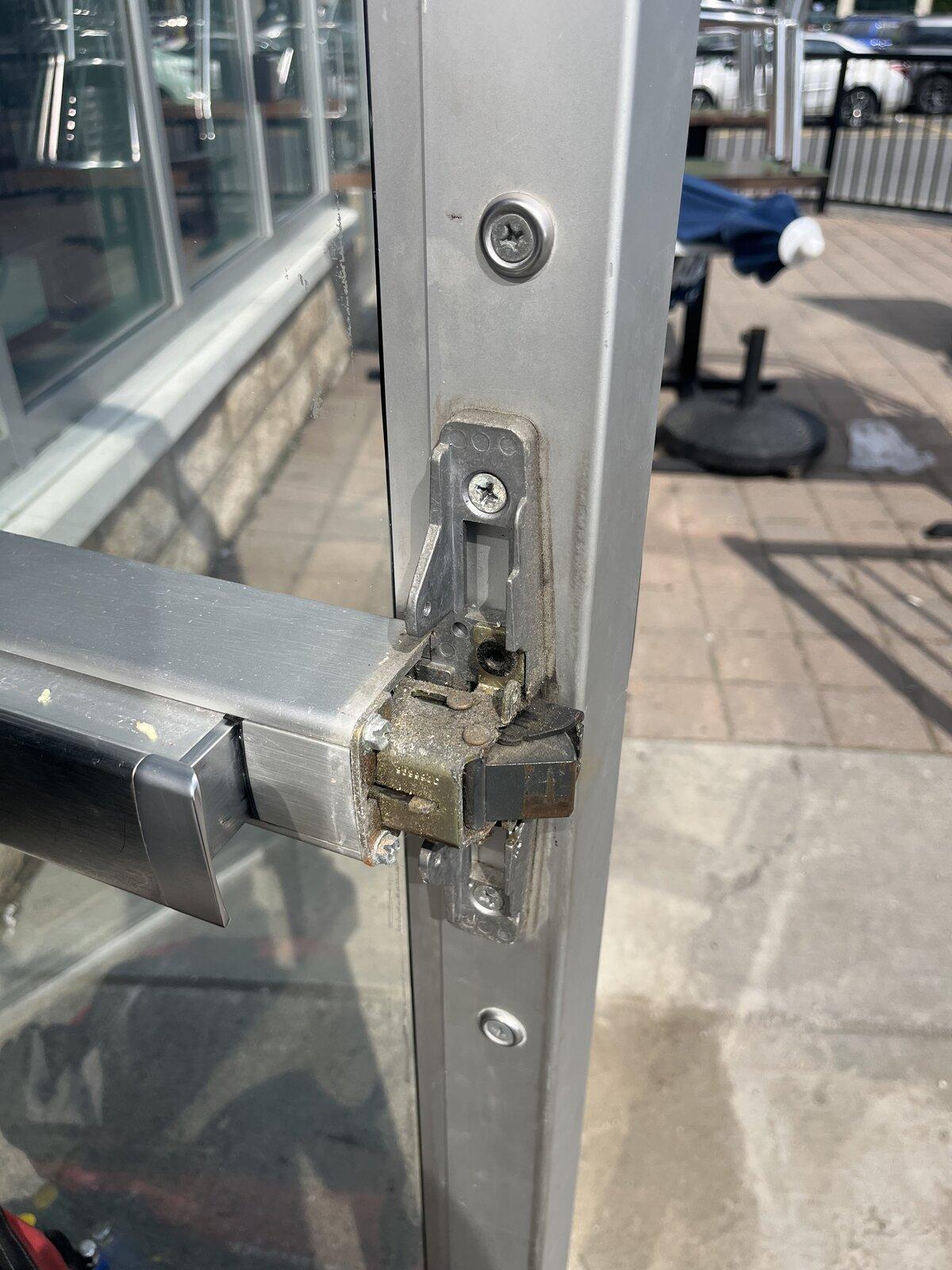
After
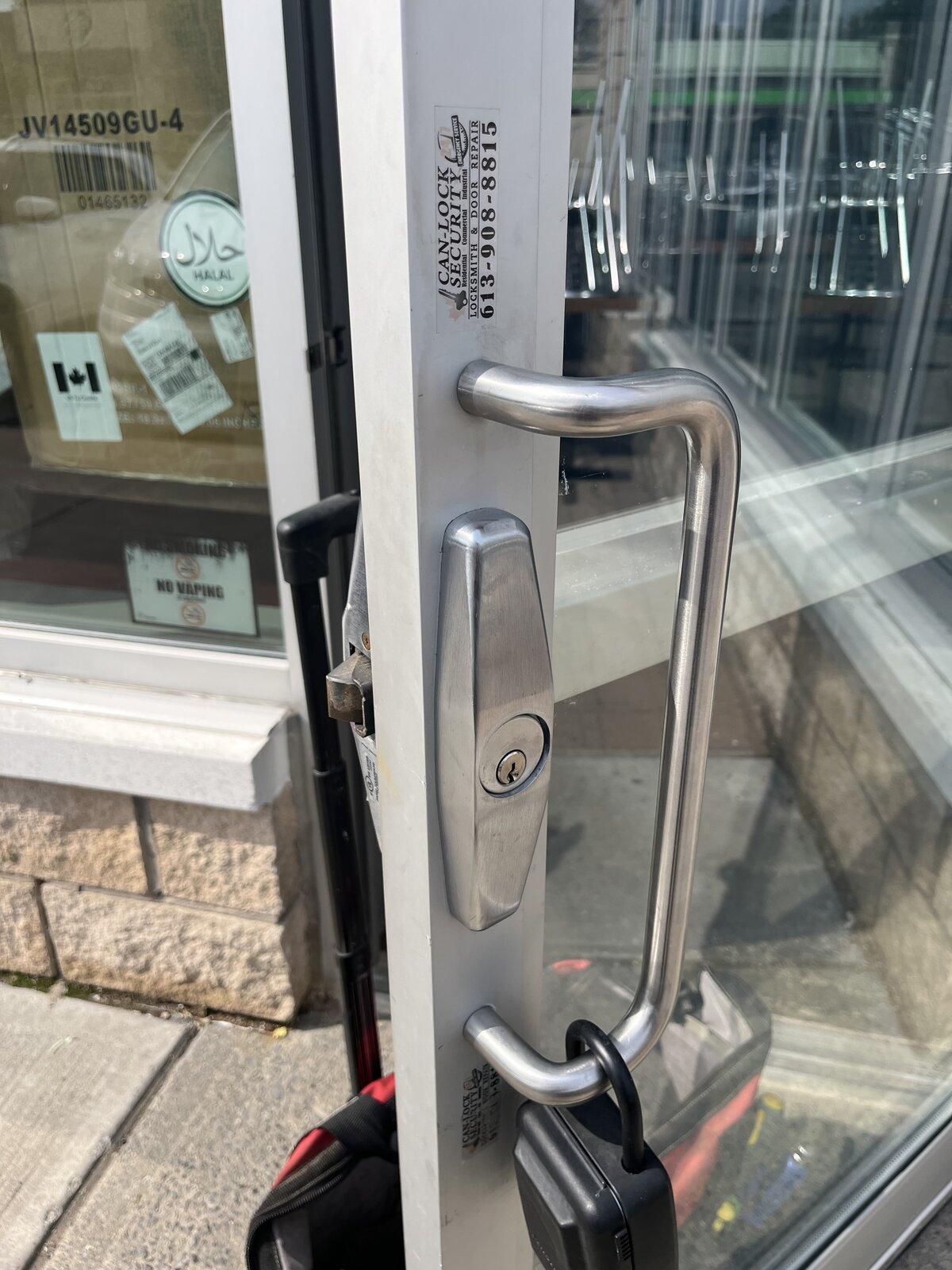
- City
- Kanata, Ontario
- Service performed
- Panic Bar / Exit Devices
- Time required
- Typically 1–3 hours depending on device condition
- Lock type
- Mortise-style storefront exit device with keyed pull
Storefront doors with panic hardware take a beating. Between hundreds of daily openings, weather exposure, and the wear that comes with high foot traffic, the exit devices on commercial glass doors are some of the hardest-working hardware on any property. On a recent call in Kanata, our team repaired and rekeyed a panic exit device on a business's front entry, restoring smooth operation and giving the owner a fresh set of keys they could control. Here's what the job involved and what commercial property owners in Kanata should know about keeping panic hardware in working order.
The Job
The business operates out of a glass storefront with an aluminum-framed entry door, the kind found on countless strip malls and commercial plazas across Kanata and the greater Ottawa area. The door was fitted with a mortise-style exit device — a vertical pull handle on the outside paired with an internal paddle or push bar mechanism that lets staff and customers exit quickly from inside, a code requirement for most commercial occupancies.
Two problems brought us out to the property. First, the panic hardware itself had become stiff and inconsistent, occasionally failing to latch properly when the door closed. Second, the business owner wanted the lock rekeyed. Commercial tenants change staff often, and previous keys were floating around that the owner could no longer account for. A worn latch and untracked keys together are a real liability for any business, so we addressed both in the same visit.
Diagnosing the Panic Hardware Issue
Panic exit devices are mechanically more complex than a standard residential deadbolt. Inside the door and frame, there's a linkage system connecting the exterior pull handle, the interior latch mechanism, and the strike components mounted into the door frame. When any part of that linkage wears, gets knocked out of alignment, or accumulates dirt and grit — which happens quickly on a door that gets opened dozens or hundreds of times a day — the whole mechanism can start to bind or fail to latch securely.
On this job, we found the latch mechanism inside the door frame had accumulated dust and dried lubricant residue, which was slowing down the internal moving parts. Combined with slightly loose mounting screws on the strike plate, the door was catching inconsistently: sometimes latching solidly, other times appearing closed while the latch hadn't fully seated. For a business, that's more than an inconvenience — a door that looks locked but isn't fully engaged is a security and liability issue, especially overnight when no staff are on-site to notice.
We disassembled the affected section of the panic hardware, cleaned out the accumulated debris, and re-lubricated the internal linkage with a lubricant rated for the moving components rather than a generic household spray, which can attract more dust over time and make the problem worse within a few months. We also re-secured and re-aligned the strike plate mounted into the door frame so the latch seats consistently every time the door closes.
Rekeying the Mortise Cylinder
With the mechanical issue resolved, we moved on to the rekey. The exterior pull handle on this type of storefront door houses a mortise cylinder — a keyed cylinder set into the handle itself, separate from the panic hardware's internal mechanism. Rekeying a mortise cylinder means changing the internal pin configuration so old keys no longer operate the lock, without needing to replace the entire cylinder or hardware set.
For a commercial property, rekeying is almost always the right call over full lock replacement when the hardware itself is in good working condition. It's faster, less expensive, and gets the same result: every key that used to work on that door stops working the moment we finish. The business owner walked away with a new set of keys and the confidence that former employees, contractors, or anyone else who'd had a key in the past no longer had access.
Why Rekeying Matters for Commercial Properties
Key control is one of the most overlooked parts of commercial security. A lot of business owners think about alarm systems, cameras, and locks themselves, but don't think about how many people have held a key to the front door over the years. Employees leave, sometimes on good terms and sometimes not. Cleaning crews, contractors, and property managers often get copies cut for a single job and never return them. Every uncontrolled key is a door that isn't fully secured, no matter how good the lock itself is.
We recommend commercial tenants and property owners rekey in a few common situations:
- After a change in staff, especially management, key holders, or anyone with unsupervised access after hours
- After taking over a new lease space, since there's no way to know how many keys the previous tenant had in circulation
- On a routine schedule, particularly for businesses with high staff turnover
- Any time a key is lost or unaccounted for, rather than hoping it doesn't turn up in the wrong hands
Rekeying is a straightforward, affordable way to reset that risk without the cost of replacing hardware that's still functioning well mechanically.
Panic Hardware and Code Compliance
Panic exit devices aren't just a convenience feature. Ontario's building and fire codes require certain occupancy types — including most retail, food service, and public-facing commercial spaces — to have exit hardware that allows people to leave the building quickly without needing a key, even if the door is locked from the outside. That makes keeping panic hardware in good working order more than a maintenance issue. A device that sticks, fails to latch, or doesn't release cleanly under pressure can become a life safety problem during an emergency, and it can also be a liability issue if an inspector flags it during a fire code review.
Businesses often don't notice panic hardware wearing down gradually, because staff get used to giving the door an extra push or jiggling the handle to get it to latch. That kind of workaround becomes normal until the door either stops locking properly or stops opening properly, and by then it's usually a bigger repair than if the wear had been caught earlier. A once-a-year check of exit hardware, especially on high-traffic storefronts, catches most of these problems before they become urgent.
Signs Your Panic Bar Needs Attention
A few warning signs tell us a panic exit device needs service before it fails outright:
- The door doesn't latch on the first try, requiring staff to push or slam it shut
- The exterior handle feels loose or wobbly when pulled
- The interior push bar feels stiff or requires more force than it used to
- Visible rust or corrosion on the mounting hardware or strike components, common on doors exposed to winter salt and moisture
- The key turns hard or inconsistently in the mortise cylinder
- Unaccounted-for keys from past employees, contractors, or previous tenants
If you're seeing any of that, get the hardware checked before it turns into an after-hours lockout — or a door that won't secure overnight.
Serving Kanata and the Greater Ottawa Area
Our team handles commercial locksmith work across Kanata, Ottawa, and the surrounding area, including panic hardware repair, mortise and cylinder rekeying, full exit device replacement, and master key system setup for multi-door properties. We work with property managers, retail tenants, restaurants, and office spaces, and we carry parts for most major commercial exit device brands so a repair can often be completed in a single visit rather than requiring a return trip for special-order hardware.
If your storefront door is sticking, failing to latch, or you simply don't know how many keys are floating around out there, give us a call. A rekey is one of the most cost-effective security upgrades a business can make, and a proper panic hardware repair keeps your door both secure and code compliant.
Call us in Ottawa at 613-908-8815 to book a commercial service call in Kanata or anywhere across the greater Ottawa area.
Frequently asked questions
Open a question for a short answer.
Often yes. On this Kanata storefront we serviced the exit-device linkage and strike, then rekeyed the mortise cylinder so old keys stopped working before we left.
If the panic hardware is mechanically sound, rekeying the cylinder resets key control without replacing the device. Replacement is for cracked bodies, bent rods, or obsolete parts that cannot be serviced honestly.
If the latch has not fully seated, the opening is not actually secure. That is a liability overnight when no one is there to notice a soft latch.
After staff or management changes, after taking over a leased space, on a routine schedule with high turnover, or whenever a key is lost or unaccounted for.
Many retail, food service, and public-facing commercial spaces in Ontario require exit hardware that lets people leave without a key. Keeping that hardware working is a life-safety and compliance issue, not only a convenience fix.
Doors that need a slam to latch, loose exterior pulls, stiff interior bars, hard-turning keys, corrosion on strikes, or keys you can no longer account for.
Yes. Commercial exit-device repair, mortise cylinder rekeying, and related storefront hardware work are regular calls across Kanata and the greater Ottawa area.