Winter-ready entry hardware
Why Ontario Winters Are Hard on Home Security
Every fall, Ottawa homeowners call us with a wave of complaints that all sound the same: a lock that turned fine in September suddenly won't budge in November. It's not bad luck. It's physics. Ottawa winters put moisture, cold, and temperature swings through your locks every single day, and most locks were never built with that kind of abuse in mind.
Ottawa's deep freezes are especially hard on deadbolts, and the mechanism inside experiences expansion and contraction that summer locks just don't see. The same holds true a little further south in the GTA, where freeze-thaw cycles closer to the lake create their own version of the problem. Add road salt, slush, and the humidity that comes off a warm Ottawa entryway meeting cold air, and you've got the perfect conditions for a lock to fail right when you need it most — usually on the coldest night of the year, with your hands full of groceries.
A seasonal check takes maybe twenty minutes. A lockout at 11 p.m. in January takes a lot longer, and costs more too.
Start With Your Exterior Doors
Before you even touch the lock itself, open and close every exterior door slowly and pay attention to how it feels. Does it drag along the bottom? Does it need a shove to latch? Small amounts of seasonal swelling in the door frame put pressure on the lock mechanism that most homeowners never connect back to the door itself. If a door is sticking, the deadbolt is fighting an uphill battle every time you lock up, and that extra strain wears out the bolt and strike plate faster than normal use ever would.
Check the weatherstripping too. If you can see daylight around the edges of the door, or feel a draft with your hand, cold air is getting in — and so is moisture, which is exactly what causes lock components to rust from the inside out.
Deadbolts: The First Thing to Check
Your deadbolt is doing more work than any other part of your home's security, so it deserves the most attention. A few things to look for:
- Does the key turn smoothly, or does it catch partway through? Catching is often the first sign of internal corrosion or a misaligned strike plate.
- Does the bolt throw fully into the frame? If you can see or feel it stopping short, that's a security gap, not just an inconvenience.
- Is there visible rust on the bolt or faceplate? Once rust starts, it spreads. A light coat of graphite or a dedicated lock lubricant (never household oil, which attracts grit and gums up the pins) can buy you time, but a rusted deadbolt is usually close to the end of its life.
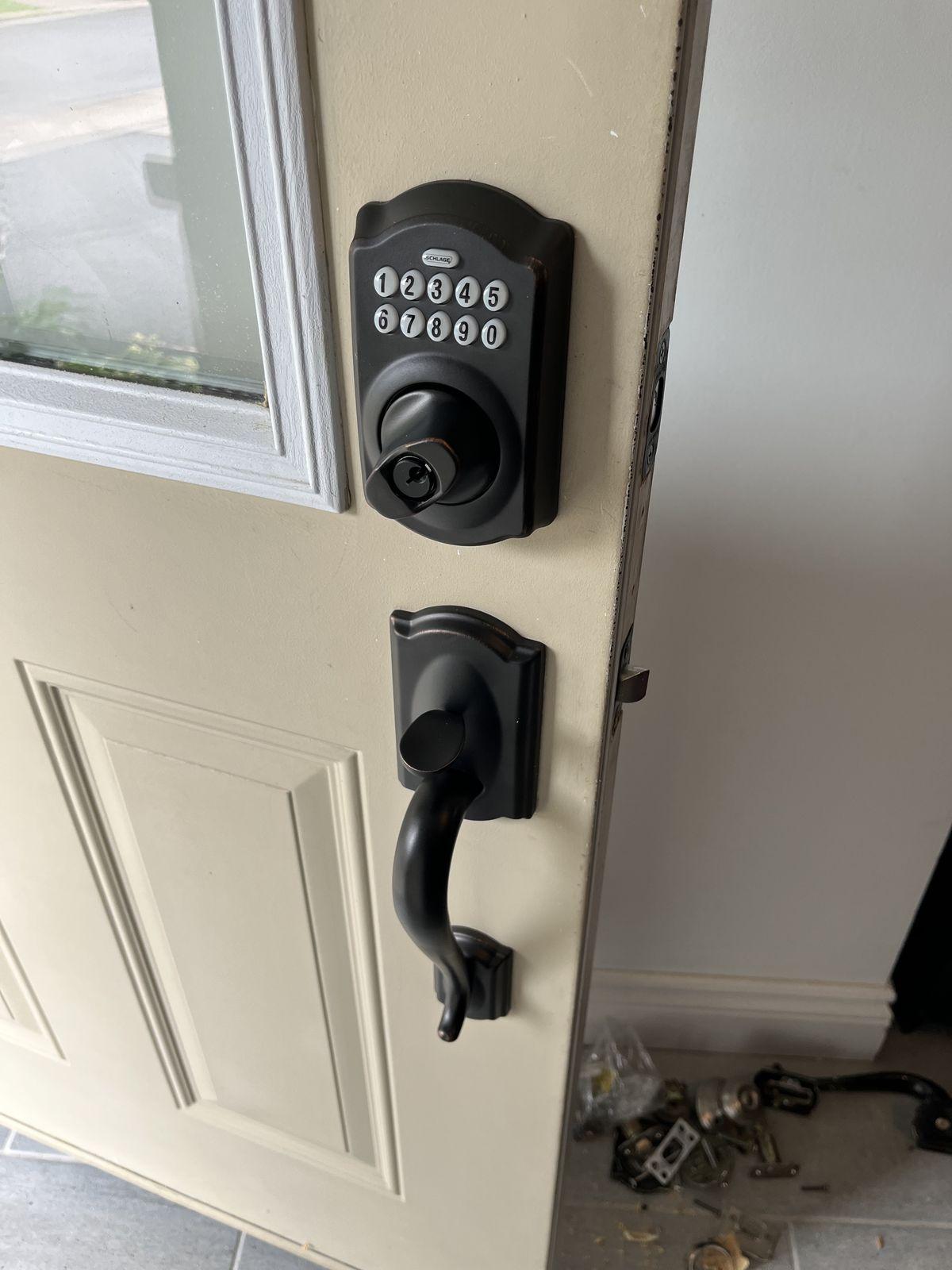
If your home still has a builder-grade deadbolt from move-in day, winter is a good time to think about upgrading. Our residential locksmith and lock replacement teams see a lot of ten-plus-year-old deadbolts every fall across Ottawa neighbourhoods like Kanata, Nepean, Barrhaven, and Orleans, and the story is almost always the same: simply worn out, not broken in any dramatic way, just tired.
Smart Locks and Cold Weather
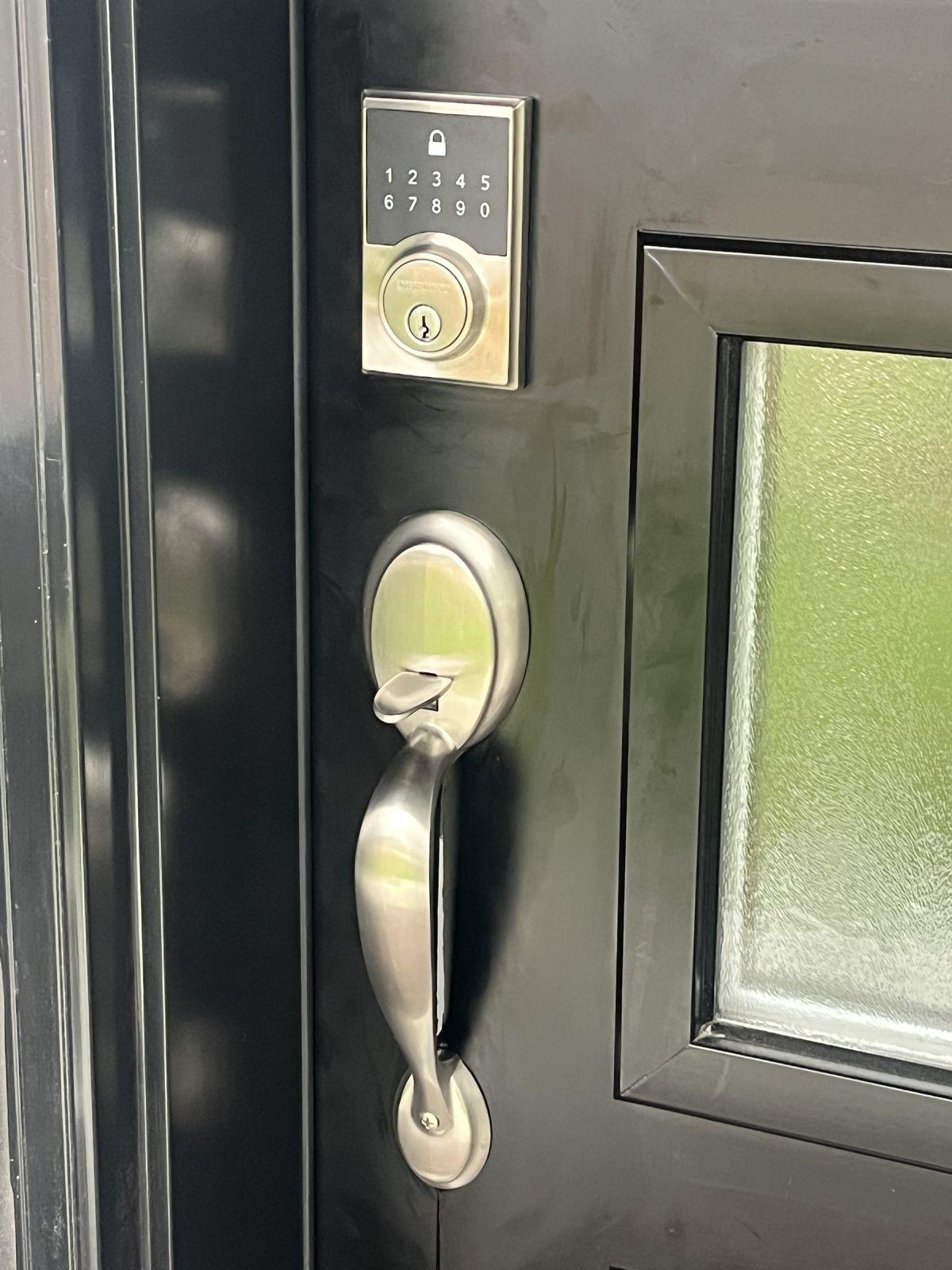
Smart locks have become popular across Ontario for good reason: keyless entry, remote access for family, and easy code changes when you have kids, dog walkers, or rental guests. But cold weather is genuinely tough on them, and it's worth knowing the failure points before you're locked out in a snowstorm.
Battery drain is the big one. Lithium batteries lose capacity in cold temperatures, and a smart lock mounted on an exterior door in an unheated vestibule can eat through batteries noticeably faster between October and March. We recommend checking battery levels monthly through the winter, not just when the low-battery alert shows up — by the time you get that alert, you may only have a day or two left.
The second issue is condensation. Warm air from inside the house meeting a cold exterior faceplate can create moisture inside the lock body, which over a season or two leads to corrosion on the electronic contacts. If your smart lock has a weather-resistant model designation, make sure it was actually rated for Canadian winters and not just light rain. Our smart lock installation team can walk you through which models genuinely hold up here versus which ones are marketed for milder climates.
Garage Entry Doors Get Overlooked
The man-door between your garage and the outside, or between your garage and your house, is one of the most neglected locks in the average Ontario home. People assume the garage door opener is their security, and forget that a simple deadbolt or knob lock on that side entry is often original to the house and hasn't been touched in years.
Garages are unheated, which means that side door lock experiences the harshest temperature swings on the property. It's also usually the door people use least often, so a frozen or seized lock can go unnoticed for months. Test it now, before you need to grab a shovel out of the garage during the first snowfall.
Spare Keys: Where They Go Wrong
Almost every Ontario household has a spare key somewhere — under a planter, with a neighbour, in a lockbox by the door. Fall is a good time to take stock of where your spares actually are and whether they still work. Keys left outside in a lockbox go through the same freeze-thaw punishment as your main lock, and a key that's slightly bent or worn can seize inside a cold cylinder even if it worked fine all summer.
If you've moved, had a break-in, gone through a separation, or simply lost track of who has a copy over the years, this is also a good moment to consider rekeying rather than just cutting new spares. Rekeying changes the internal pins so old keys no longer work, without the cost of replacing the whole lock.
A Simple Winter Maintenance Routine
You don't need to overhaul your whole security setup every October. A short routine covers most of what causes winter lock failures:
- Wipe down exterior lock faces to remove road salt residue that blows in from driveways and walkways.
- Apply a graphite or silicone-based lock lubricant to keyholes and bolts, not oil.
- Test every exterior door lock, including garage and shed doors, by locking and unlocking fully.
- Check smart lock battery levels and replace batteries proactively before December.
- Confirm spare keys are accessible, functional, and only held by people you trust.
- Look over weatherstripping and door alignment while you're at it, since door problems and lock problems are usually connected.
Upgrades Worth Making Before the Snow Flies
If your check-up turns up a lock that's rusted, sticking, or original to a house built ten or more years ago, it's often more cost-effective to upgrade now than to pay for an emergency callout in February. A few upgrades we see pay off across both the Ottawa area and the GTA:
- High-security deadbolts with hardened steel components that resist both physical attacks and the wear that comes from years of freeze-thaw cycles, which is especially relevant for older Ottawa homes that have been through decades of winters.
- Smart locks rated for Canadian winters, ideally with a physical key override so you're never fully dependent on batteries.
- Reinforced strike plates, which cost very little but dramatically improve how well a door frame holds up to both forced entry attempts and the everyday stress of a swelling winter door.
Final Word
A winter-ready lock isn't complicated to achieve, it just gets skipped because locks are one of those things nobody thinks about until they fail. Twenty minutes now, before the first freeze, is the cheapest home security investment you'll make all year.
If your fall check turns up a lock that's rusted, sticking, or overdue for an upgrade, Can-Lock Security is Ottawa's trusted choice for pre-winter lock inspections, serving every corner of the city and surrounding area including Kanata, Nepean, Barrhaven, Stittsville, Orleans, Arnprior, Renfrew, Carleton Place, and Almonte. We also serve homeowners across the wider GTA including Toronto, Mississauga, Brampton, Vaughan, Markham, and Richmond Hill. Call us for a pre-winter lock inspection, or book a rekey, lock replacement, or smart lock installation before the snow arrives.
Ottawa: 613-908-8815 | Toronto/GTA: 647-975-1702
Suggested internal links: Residential Locksmith, Lock Replacement, Smart Lock Installation, High-Security Locks, Rekeying, Emergency Locksmith
FAQs
Open a question for a short answer.
Once a year, ideally in October or early November, before the first hard freeze. A quick lubrication and function test catches most problems before they become emergencies.
Graphite powder or a silicone-based lock lubricant. Avoid WD-40 or household oils long-term, since they attract dust and grit that can gum up the internal pins.
Yes. Forcing a key into a frozen or seized lock is one of the most common ways keys snap off inside the cylinder, which usually means an emergency locksmith visit rather than a simple fix.
If the lock is functioning smoothly with no rust and throws fully, servicing is enough. If it's sticking, rusted, or more than ten years old, replacement is usually the better long-term value.
Many do, but not all models are built for it. Look for cold-weather battery ratings and a mechanical key backup. Our team can recommend models that hold up well across both regions.