Toronto's housing mix means a sliding door might lead to a backyard patio on a house, or a balcony many floors up in a condo tower, and both raise real, if slightly different, security questions. Research from Toronto's condo industry has specifically identified ground-floor and second-floor units, along with those near stairwells, as facing the highest risk of sliding door entry, and documented cases exist of intruders using something as simple as a wheeled dumpster as a makeshift ladder to reach a second-floor balcony.
Why a Standard Latch Isn't Much of a Deterrent, House or Condo
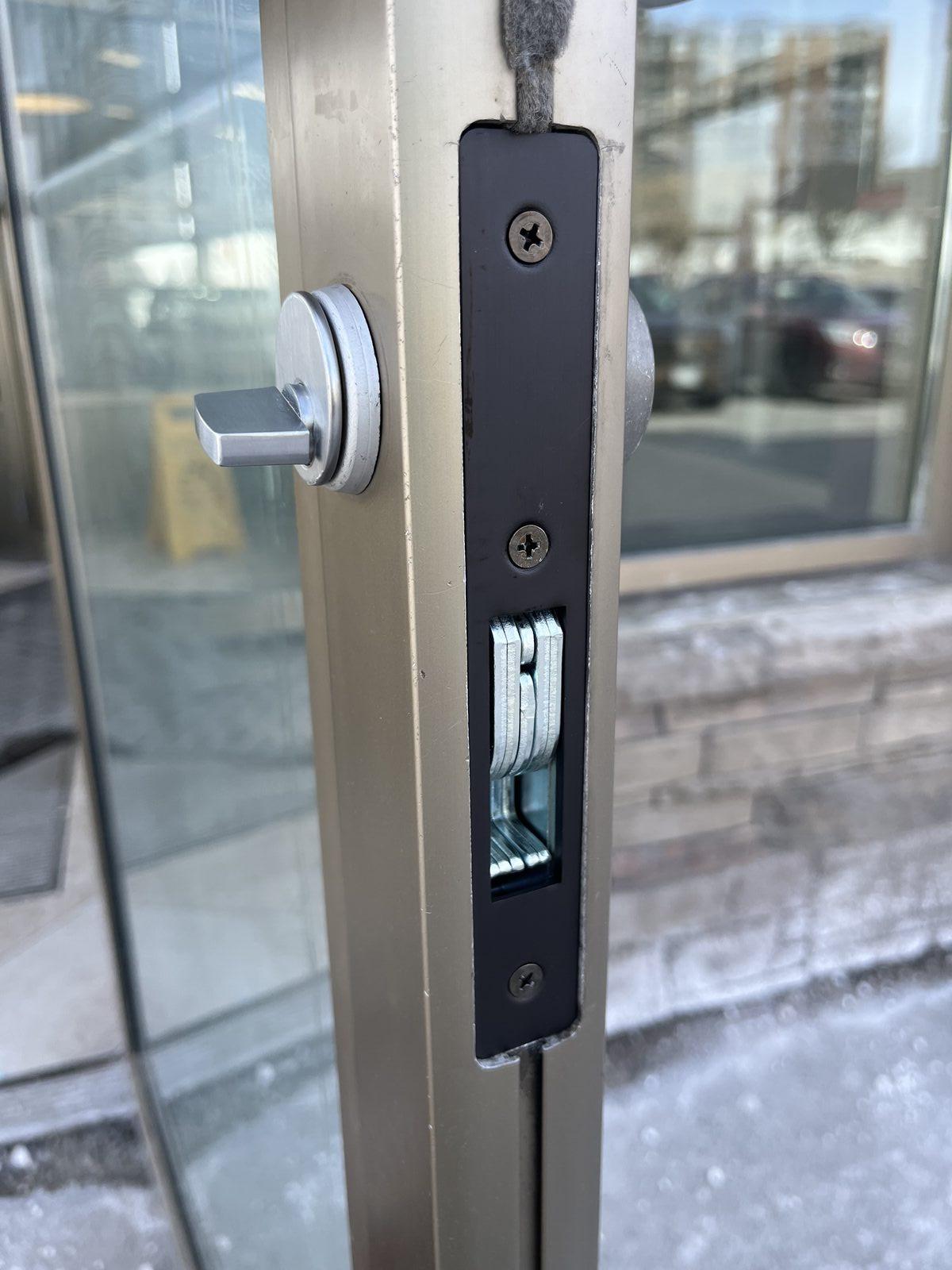
Most sliding patio and balcony doors ship with a simple hook latch built primarily to keep the door from sliding open on its own, not to resist a determined attempt at forced entry. A sliding door can often be lifted off its track or pried open with minimal effort if that's the only security in place, regardless of whether it's a backyard patio door or twelve floors up.
What Ontario's Building Code Actually Requires for the Glass Itself
Beyond the lock, Ontario's Building Code requires all patio door glass to be safety glazing, either tempered or laminated. Tempered glass is significantly stronger than standard glass and breaks into small, relatively blunt pieces if it does fail, rather than sharp shards. This is a baseline safety requirement, separate from the lock hardware itself, and it's worth knowing your door's glass meets this standard, particularly if you're in an older Toronto home where the original glass may predate current code.
Why Ground-Floor and Stairwell-Adjacent Condo Units Face Real, Documented Risk
Toronto condo security research has specifically flagged first and second-floor units, along with those near stairwells, as facing the highest actual risk of sliding door entry attempts. This isn't a hypothetical concern — documented cases include intruders climbing privacy fences or using an emptied garbage dumpster as an improvised ladder to reach a second-floor balcony. If your unit fits this profile, it's genuinely worth taking the sliding door's security more seriously than a higher-floor unit might need to.
Upgrade Options for Better Security
A secondary foot bolt or auxiliary lock reinforcing the door beyond the standard latch. A track-mounted security bar, sometimes called a Charlie bar, physically preventing the door from sliding even if the latch is defeated. An anti-lift device, preventing the door from being lifted out of its track — Toronto Police's own crime prevention guidance specifically recommends inserting a screw into the upper track to close this exact gap. A keyed lock upgrade, for anyone who wants the patio door secured with an actual key rather than an interior latch alone.
What Repair vs. Upgrade Actually Involves
Repair addresses a mechanism that's stiff, misaligned, or not engaging properly, often a matter of cleaning, adjusting, or replacing worn components. Upgrade means adding security beyond what the door originally shipped with. We assess which situation you're actually in and recommend accordingly, rather than assuming every call needs the same fix.
A Note for Condo Owners Considering Hardware Changes
If you're in a condo, it's worth confirming with building management before making changes to a balcony door's hardware, particularly anything affecting the exterior appearance or the unit's fire rating, since some buildings have specific rules around this.
Why Toronto Residents Choose Can-Lock Security
Can-Lock Security is a mobile, family-owned locksmith that repairs and upgrades sliding patio and balcony door security across Toronto's full mix of housing types, assessing your specific door honestly rather than offering a generic solution.
Book Your Toronto Patio Door Lock Service
Whether it's a repair or a security upgrade, Can-Lock Security can help secure your sliding patio or balcony door properly. Reach out to schedule.
Related pages: Window Lock Repair | High-Security Locks | Residential Lock Replacement | Break-In Repair