- City
- Ottawa, Ontario
- Service performed
- Smart Lock Installation
- Time required
- Typically 1–2 hours depending on door prep
- Lock type
- Keyless / smart deadbolt (prep-matched)
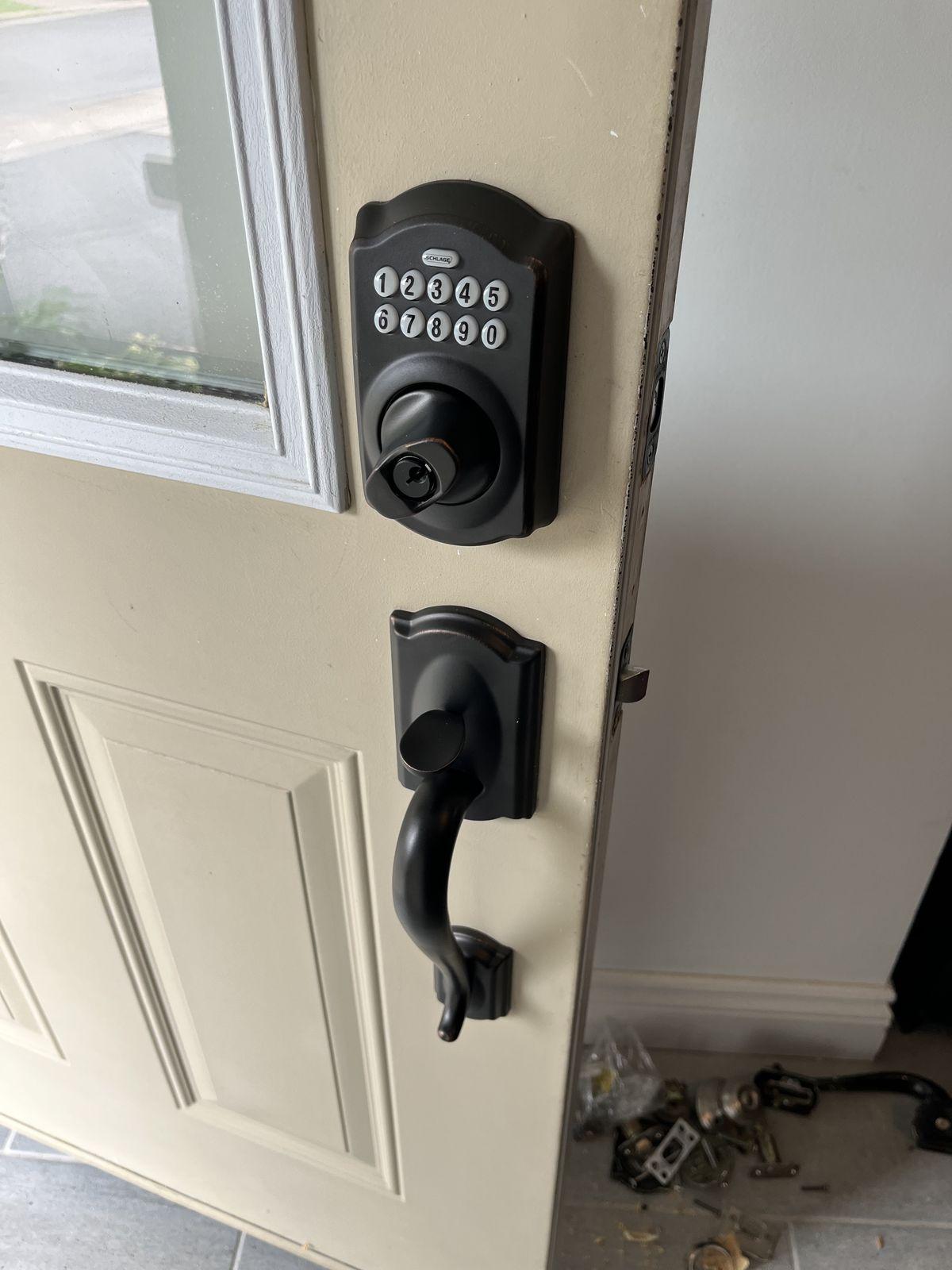
This project page is the decision and door-prep companion for residential smart lock work in Ottawa — how we match product to the opening, verify mechanical backup, and when we recommend not going keyless yet. For a named keypad case study (Eufy matte black with keyed backup above a handleset), see Ottawa Eufy keypad deadbolt installation. Service overview: smart lock installation.
Choosing a smart lock that fits the door you already have
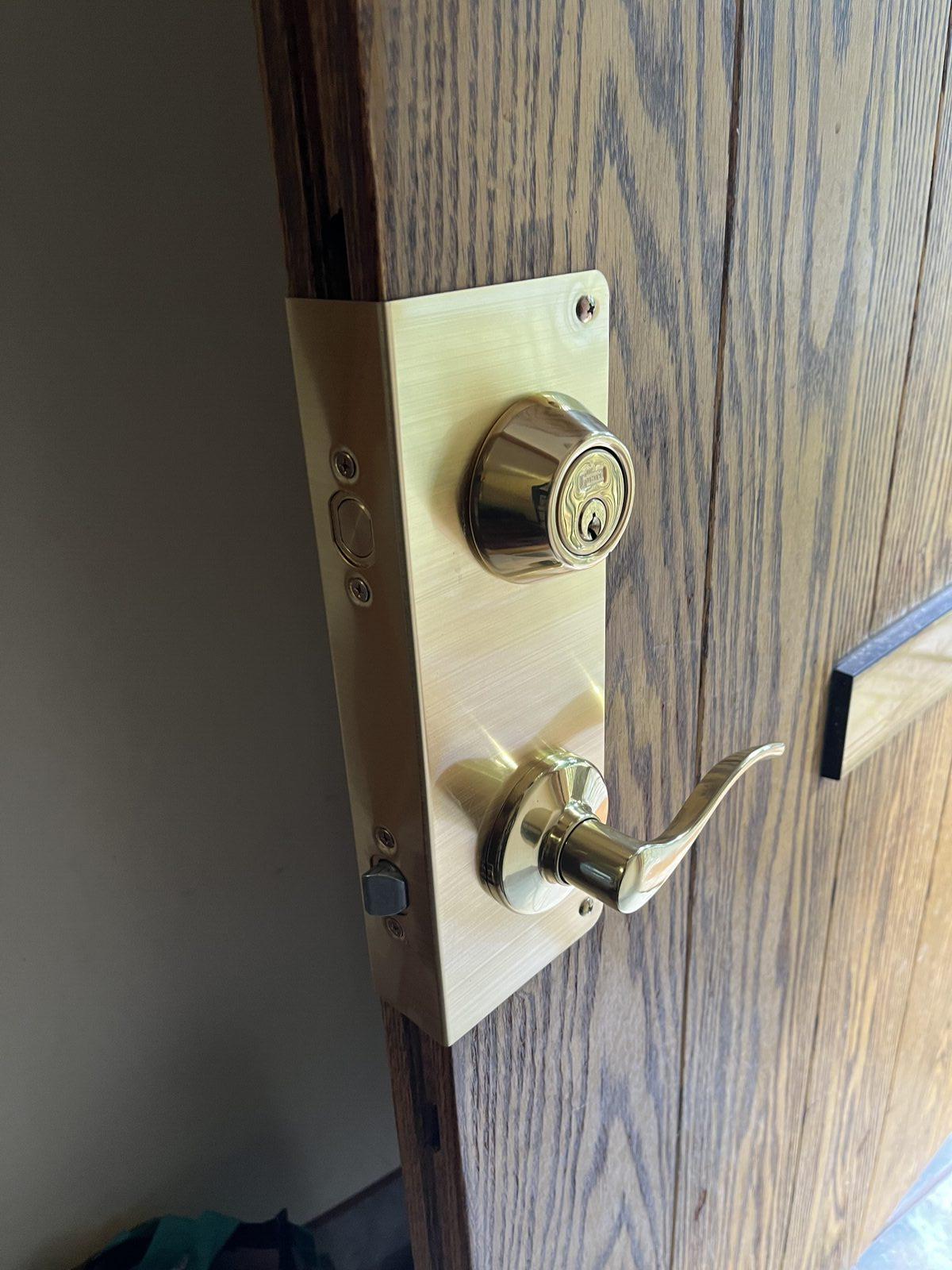
A smart lock install fails more often from door prep mismatch than from Wi-Fi drama. Bore size, backset, door thickness, and whether the existing strike can accept a full deadbolt throw all matter before brand features do. Ottawa homes range from newer builds with standard prep to older doors that need careful measurement so the keypad or motorized unit sits flush and latches cleanly.
We match the product to the opening: single-bore deadbolt replacements, handleset integrations, and models that need a bit more clearance around the edge. If a particular lock would fight the door — wrong backset, insufficient thickness rating, or a strike that cannot be aligned — we say so up front rather than forcing a popular model into a bad fit.
Mechanical backup still matters
Most quality residential smart locks still include a keyed cylinder or another mechanical override. That backup is not optional marketing fluff in a Canadian winter: batteries fail in cold snaps, phones die, and apps go offline. Before we leave, we confirm that the mechanical path works with the keys provided and that you know where those keys live.
Code hygiene is part of handoff too. Default codes should be changed, temporary guest codes should have an expiry plan, and anyone who previously had a builder or demo code should be removed. A smart lock with yesterday’s codes still active is only as secure as the least careful person who ever received one.
What we test on a residential install in Ottawa
Installation is not finished when the app pairs. We cycle lock and unlock from the keypad, from the interior, and with the mechanical key. We watch the bolt throw fully into the strike without the door needing a hip-check. If the door has seasonal swell — common on wood exterior doors in the Valley — we adjust strike position so the motor is not fighting a tight frame every night.
Battery orientation, low-battery warnings, and how the model behaves when power is critically low get a quick walkthrough. Some units chirp; others refuse to lock until batteries are changed. Knowing that behaviour before the first −20 °C morning avoids emergency calls that are really battery calls.
If the household wanted the lock tied to an existing hub or voice assistant, we verify pairing where the product supports it and document what we could and could not complete on site. Network credentials and third-party account access stay under your control; we do not need permanent access to your home Wi-Fi after the job.
When a smart lock is the wrong recommendation
Not every door should become keyless. A warped door that barely latches, a hollow-core interior used as a fake “security” door, or a rental where the landlord forbids permanent hardware changes may need a different plan. Sometimes the honest fix is a solid mechanical deadbolt and strike reinforcement first, with electronics later once the opening is square.
Multi-unit buildings and condo rules can also limit what you may install on a corridor door. We work within property requirements and will not pretend a bylaw or board rule does not exist.
Living with the lock after install day
Plan who gets codes versus physical keys. Kids, cleaners, and short-term guests each need a different access pattern. Shared family codes that never change become the same problem as a house key under the mat — convenient until they are not.
Schedule a battery reminder twice a year, ideally when clocks change. Keep a spare set of the correct battery type in a known drawer. If the lock starts to stutter or the bolt hesitates, call before the motor burns itself out pushing against a misaligned strike; many “smart lock failures” are door alignment problems wearing an electronic actuator.
This project page reflects residential smart lock decision work of the kind shown — product matched to prep, mechanical backup verified, daily use explained. Exact brand availability changes; the process of fitting, testing, and handing off cleanly does not.
Frequently Asked Questions
Do I need Wi-Fi for a smart lock to work? Many locks operate locally with codes and Bluetooth even without Wi-Fi. Remote unlock and some notifications need network connectivity. We clarify what your chosen model actually requires.
Will you take my old deadbolt with you? If you want the old hardware removed and disposed of or left with you, say so. We remove what the new install replaces unless you ask to keep it.
Can one smart lock match keys with my other doors? Only if the smart lock’s mechanical cylinder uses a compatible keyway and we pin or order it that way. Many electronic units use their own keyway.
How long does installation usually take? A typical residential swap on standard prep is often about one to two hours including testing and walkthrough. Non-standard doors take longer.
What happens if the batteries die while I am away? That depends on the model. Most still allow mechanical key entry. Some support emergency jump power at the keypad. We show you the backup path for the unit installed.
Can you install smart locks in Kanata, Nepean, or Barrhaven as well as central Ottawa? Yes. Smart lock installs are a regular residential request across Ottawa and the Valley service areas when door prep and product choice line up.
Call Ottawa at 613-908-8815 to talk through door prep before you buy a lock that will not fit.
Frequently asked questions
Open a question for a short answer.
Many locks operate locally with codes and Bluetooth even without Wi-Fi. Remote unlock and some notifications need network connectivity. We clarify what your chosen model actually requires.
If you want the old hardware removed and disposed of or left with you, say so. We remove what the new install replaces unless you ask to keep it.
Only if the smart lock’s mechanical cylinder uses a compatible keyway and we pin or order it that way. Many electronic units use their own keyway.
A typical residential swap on standard prep is often about one to two hours including testing and walkthrough. Non-standard doors take longer.
That depends on the model. Most still allow mechanical key entry. Some support emergency jump power at the keypad.
We show you the backup path for the unit installed.
Yes. Smart lock installs are a regular residential request across Ottawa and the Valley service areas when door prep and product choice line up. Call Ottawa at 613-908-8815 to talk through door prep before you buy a lock that will not fit.