
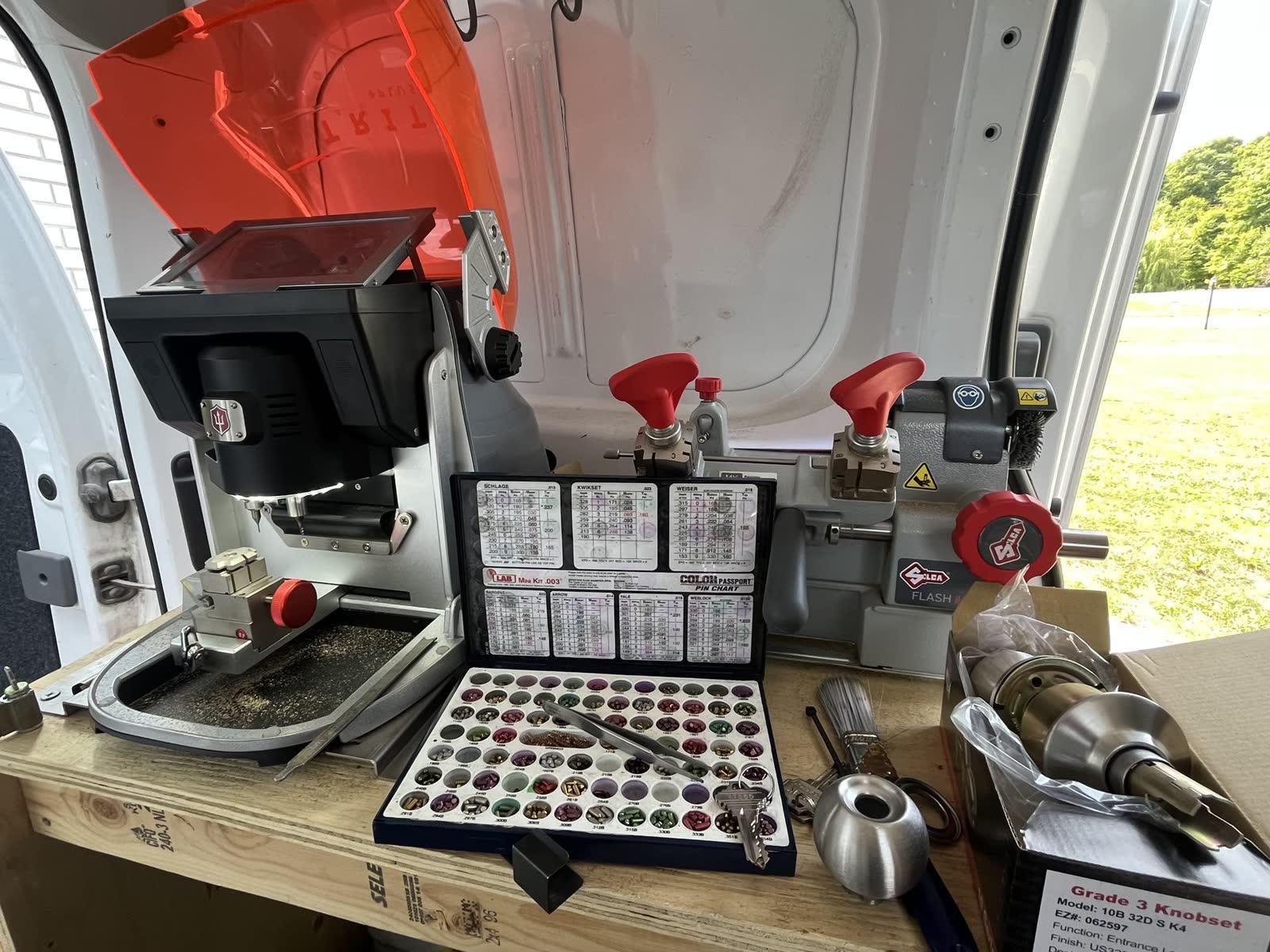
Master keying and pin kit setup
The Problem Master Key Systems Solve
Any Ottawa business with more than a handful of doors eventually runs into the same problem: some employees need access to everywhere, some need access to just their department, and a few doors, like a server room, a safe, or an executive office, should only be accessible to specific people. Handing everyone an identical key to every door isn't practical or secure, and issuing completely separate, unrelated keys for every single door creates a keyring nightmare and makes tracking access nearly impossible. Master key systems solve exactly this problem.
How the Hierarchy Actually Works
A master key system is built in layers. At the top sits a master key, or in larger systems a grand master key, that opens every lock in the system. Below that, submaster keys open specific groups of doors, say, everything on one floor, or every door within a specific department, without opening doors outside that group. At the bottom, individual change keys open only their single assigned door. Each lock is pinned to recognize both its own specific key and the appropriate submaster and master keys above it, all without those different keys interfering with each other.
A Practical Example
Picture a two-story Ottawa office building with a warehouse attached. The building owner or facilities manager holds the grand master key, opening everything. Department managers might each hold a submaster key that opens every door within their specific area, office staff, or warehouse floor, but not other departments. Individual employees hold change keys that open only their own office or workstation door. A new employee gets a single change key. A departing employee's key can be deactivated at the lock level without affecting anyone else's access, provided the system was properly designed from the start.
Why Businesses Choose This Over Individual Locks
Beyond the obvious convenience of not needing a massive keyring, master key systems give business owners genuine control over who can access what, an audit trail of access decisions, and flexibility to adjust as the business grows or restructures. It's a meaningfully different level of control compared to simply installing the same basic lock on every door and hoping everyone uses good judgment about who they let in.
Planning a Master Key System
The most important part of designing a master key system happens before any locks go in the door: mapping out exactly which groups of people need access to which areas, and how those groups might change over time as the business grows. A poorly planned system, one that doesn't account for future hires, departmental changes, or new construction, often needs significant rework down the line. This is where working with an experienced commercial locksmith pays off, since the planning conversation upfront saves real cost and disruption later.
Security Considerations Specific to Master Keying
Master key systems require careful component selection, since the master key itself represents a significant security exposure if it's ever lost, copied without authorization, or ends up in the wrong hands. High-security cylinders with restricted keyways are particularly important at the master and submaster level, since an unauthorized copy of a master key defeats the entire purpose of the tiered system. This is an area where cutting costs on lower-quality hardware creates outsized risk relative to the savings.
Maintaining the System Over Time
A master key system isn't a set-it-and-forget-it installation. As staff turn over, departments shift, or the business expands into new space, the system needs ongoing management: tracking who holds which level of key, rekeying specific doors when a key with broader access is lost or an employee with elevated access departs, and periodically reviewing whether the current structure still matches how the business actually operates.
Final Word
A well-designed master key system gives Ottawa business owners genuine control over building access without the chaos of oversized keyrings or the risk of giving everyone identical access to everything. The upfront planning is where the real value gets built, and it's worth doing with an experienced commercial locksmith rather than piecing it together as an afterthought.
Can-Lock Security designs and installs commercial master key systems for businesses across Ottawa, including Kanata, Nepean, Barrhaven, Stittsville, and Orleans, as well as Arnprior, Renfrew, and the GTA including Toronto, Mississauga, and Vaughan. Talk to us about mapping out the right system for your business.
Ottawa: 613-908-8815 | Toronto/GTA: 647-975-1702
Suggested internal links: Commercial Locksmith, High-Security Locks, Rekeying, Lock Replacement
FAQs
Open a question for a short answer.
Most commercial systems use two to three levels, master, submaster, and individual change keys, though larger organizations sometimes add a grand master level above that for even broader control across multiple buildings.
This is a serious security event, since a lost master key can potentially open every door in the system. Depending on the situation, this may require rekeying the entire system or the affected tier.
In many cases, yes, though it typically requires replacing or reworking the existing lock cylinders to establish the proper hierarchy across all doors.
No. Even smaller businesses with a handful of departments or a mix of public and restricted areas can benefit from a properly designed master key system.
An annual review is a reasonable baseline, along with immediate updates any time there's significant staff turnover or a change in who holds elevated access.
Educational video: “Types Of Commercial Door Locks” (not affiliated with Can-Lock Security).