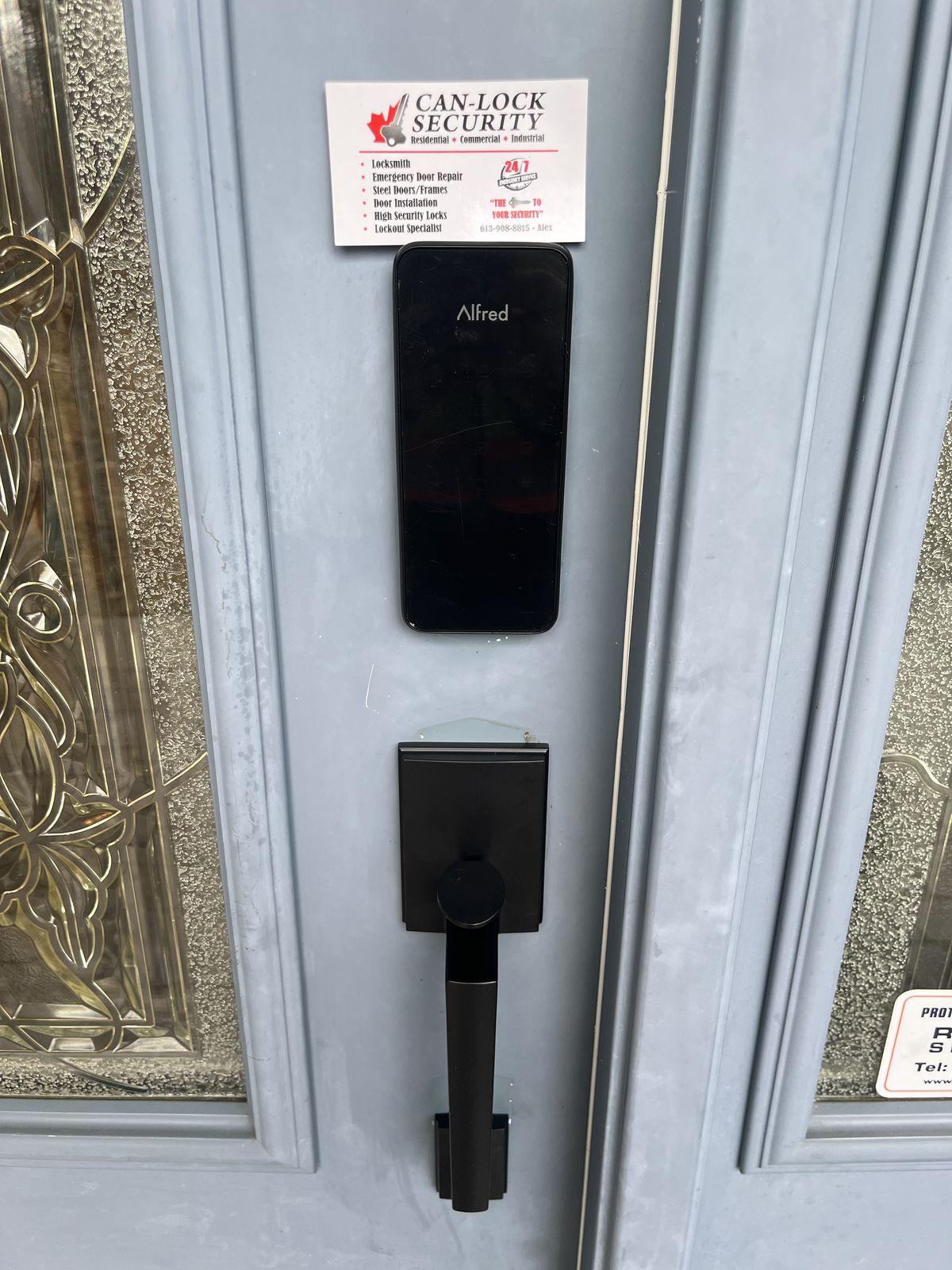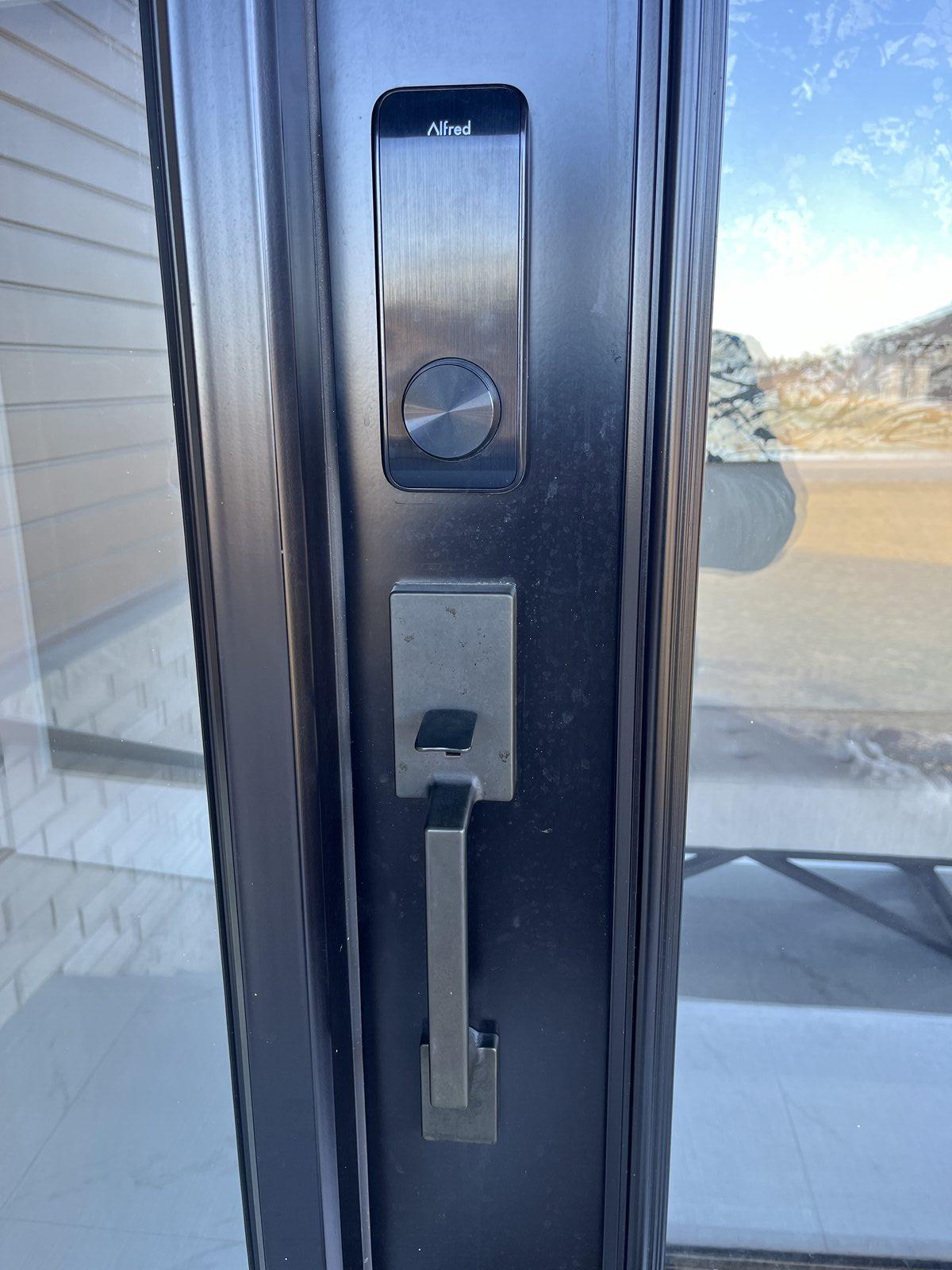
Ottawa, ON doors are not all the same job. A century home in the Glebe or Centretown, a builder-grade entry in Barrhaven or Orléans, and a condo unit downtown can each need a different smart lock conversation — door prep, building rules, connectivity, and how the hardware will behave through a real Ottawa winter. Can-Lock Security installs and configures keyless entry across the city with honest advice on whether a given model actually fits your door before anyone drills or orders hardware.
Compatible Door Prep Comes First
Most residential smart locks are designed around standard North American deadbolt prep: a 2-1/8" face bore, a 1" edge bore, and a common backset (usually 2-3/8" or 2-3/4"). Plenty of Ottawa doors match that, especially newer builds. Older doors sometimes do not — undersized bores, non-standard backset, a strike that no longer lines up cleanly, or a door and frame that have settled over decades.
Before we recommend a product, we check the bore sizes, backset, latch length, strike plate depth, and whether the door is warped or swollen enough to fight a full deadbolt throw. That check is what separates a clean swap from a lock that sticks, fails to latch fully, or needs extra door work the listing never mentioned.
Wi-Fi vs Bluetooth: What Actually Matters Day to Day
A keypad-only lock works at the door with a code — no phone, no router, no subscription. Bluetooth models pair with a nearby phone for app features when you are home. Wi-Fi (or a bridge) adds remote unlock, access logs from anywhere, and code changes without standing at the door — but it depends on your network, sometimes a hub, and occasionally a paid plan.
None of those options is automatically “better.” We ask what you actually need: family codes at the door, temporary access for cleaners or contractors, landlord turnover without rekeying, or integration with a system you already own. Then we match connectivity to that goal instead of selling the most connected product by default.
Battery Behaviour in Ottawa Winters
Smart locks run on batteries on the interior side of the door. Cold snaps, wind-driven snow on exposed entries, and freeze–thaw cycles are harder on exterior electronics than a sheltered porch. We steer Ottawa homeowners toward locks rated for outdoor cold exposure when the door faces open weather, and we talk through battery type, low-battery warnings, and keyed backup so a dead pack never means sleeping on the porch.
Proper gasket seating and a weather-rated exterior unit matter as much as the brand name. A lock that works fine in October and struggles in February usually had the wrong rating or a seal that never seated cleanly at install.
Brands We Actually Install: Schlage, Weiser, Yale, and Others
We regularly install and service familiar residential lines — Schlage and Weiser keypad and connected deadbolts, Yale and similar app-capable models, plus other keypad systems homeowners already prefer. We do not push one brand on every door. Finish match with an existing handleset, mechanical feel of the latch, battery access, and whether you want a physical key cylinder all influence the recommendation more than whatever is easiest for us to stock.
If you already bought a lock, we still check door prep and fit before installing it. Buying first and measuring later is how people end up with hardware that fights the door.
What the Technician Checks Before Drilling
On a typical Ottawa install we:
- Confirm the existing bore, backset, and strike will accept the chosen lock — or explain what must change first
- Check door swing, thickness, and whether the frame strike needs deepening or realignment
- Decide whether this is a clean deadbolt swap or whether new holes / minor door prep are required
- Only then remove old hardware, seat the new latch and exterior/interior halves, and torque fasteners correctly
- Fit fresh batteries, program codes or pair the app, and test keypad, key cylinder, and full deadbolt throw into the strike
We do not drill until the door and product are a known match. Extra holes in a finished entry door are hard to undo.
Smart Locks and Your Existing Deadbolt
Many installs replace a standard single-cylinder deadbolt while leaving a matching handleset or knob below in place. If the prep is standard, that is often a same-day swap. If the existing deadbolt is worn, misaligned, or the strike is shallow, we fix the mechanical side first — a smart lock on a bad strike is still a weak lock.
Some doors need a traditional deadbolt instead of electronics, and that is a fine outcome. We would rather say so upfront than force a product onto a door that will not reward it. When keyless entry is the right fit, we also walk through how codes, apps, and the physical key backup work before we leave.
Real Ottawa Installations
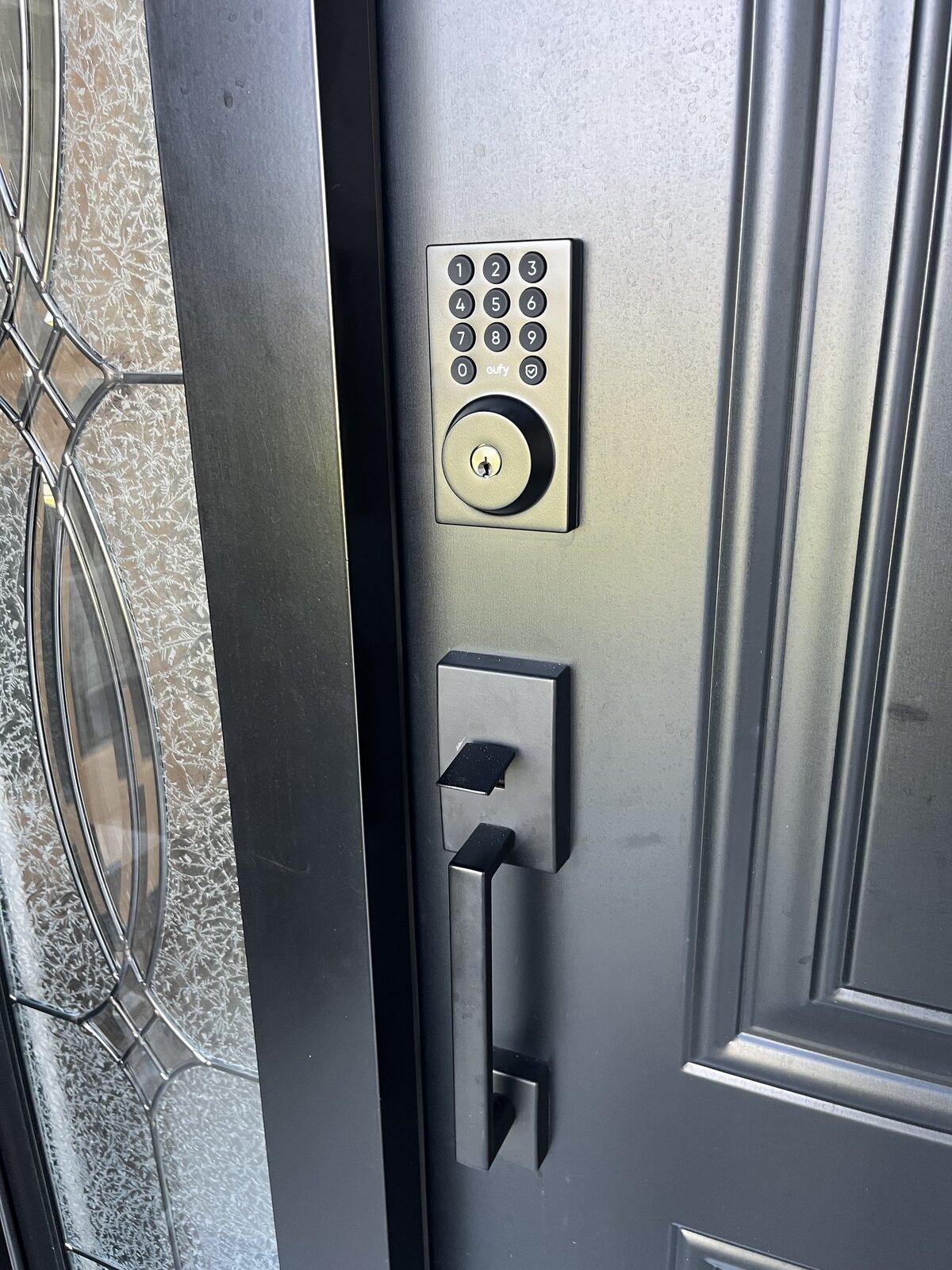
On a recent residential job we installed a matte black Eufy keypad deadbolt above an existing matching handleset — keyed backup retained, strike and throw verified, keypad and cylinder both tested before handoff. Full write-up: Ottawa keypad smart deadbolt installation.
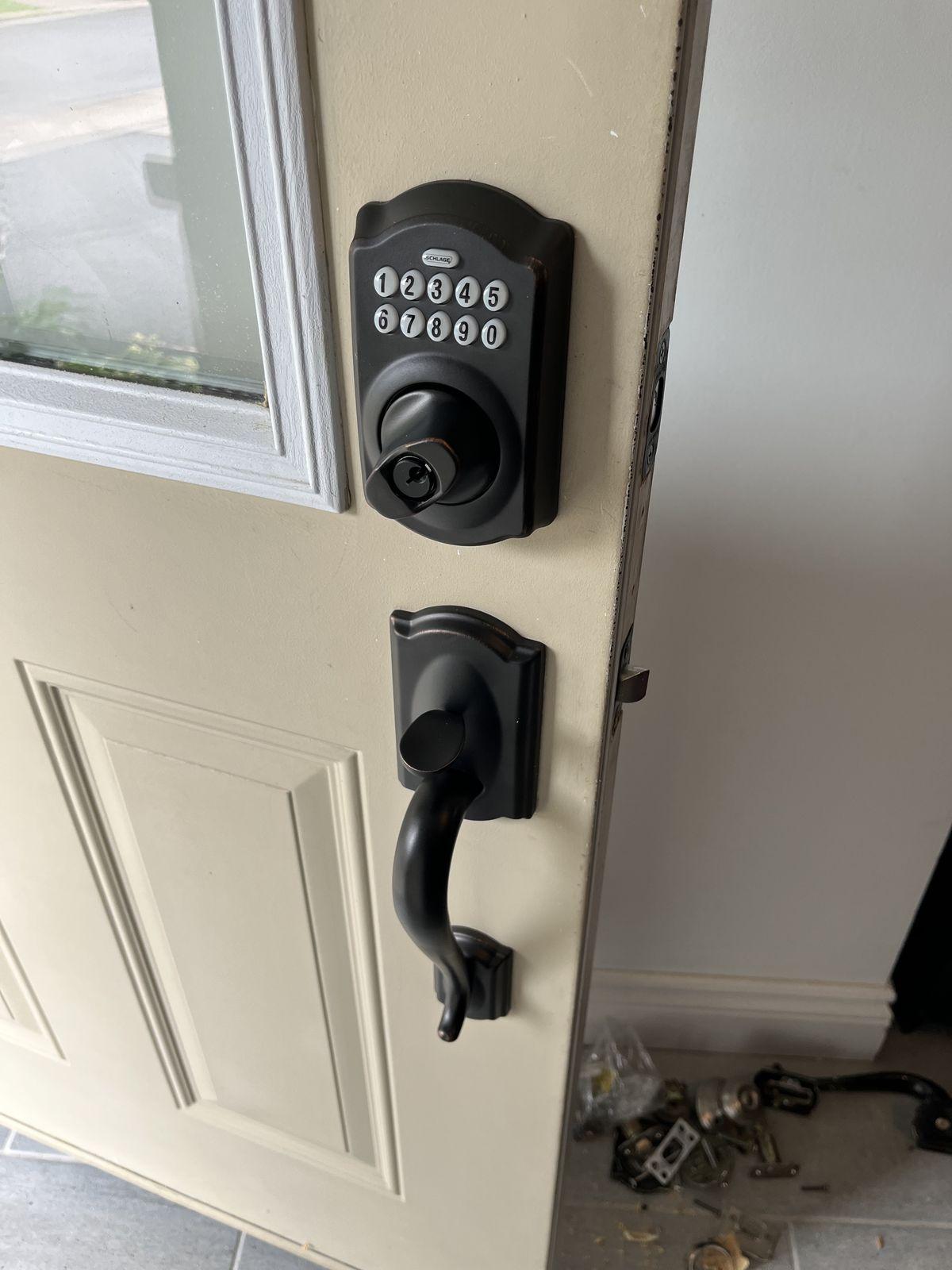
Another Ottawa install used a Schlage keypad deadbolt with a matching handleset where the priority was reliable keyless entry matched to the door’s existing prep rather than forcing a mismatched product. See residential smart lock installation in Ottawa.
Why Ottawa Residents Choose Can-Lock Security
Mobile and family-owned, installing smart locks without pushing a specific brand or the priciest option by default. We explain honestly what a given system can and can’t do — including when a solid traditional deadbolt is the better answer — before you spend anything on it.
Book Your Ottawa Smart Lock Installation
Whatever you're trying to solve, Can-Lock Security can help you figure out if a smart lock is actually the right answer, and install it properly if it is. Reach out to schedule a consultation.
Related pages: Deadbolt Installation | Access Control Systems | Residential Locksmith Services | Master Key Systems